How can I get an AML certificate?
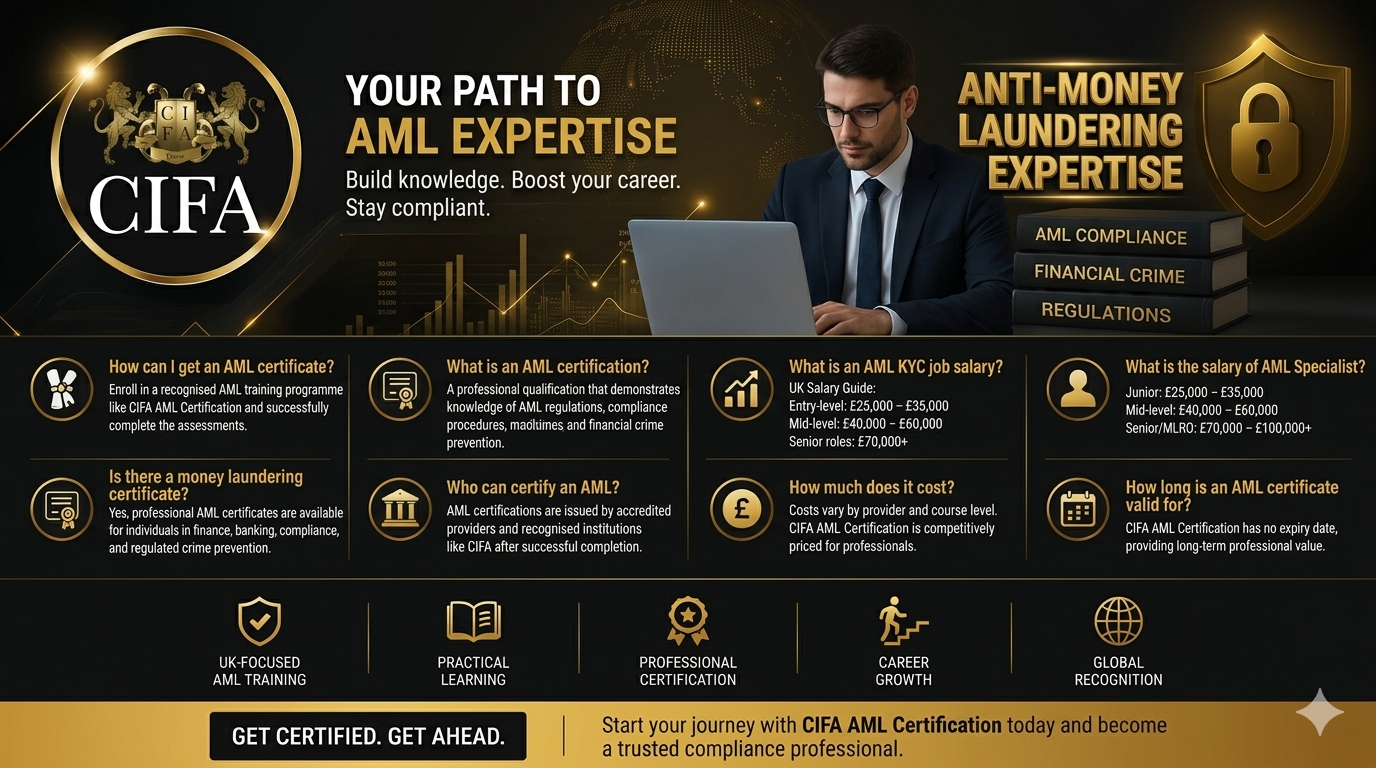
You can get an AML certificate by enrolling in a recognised Anti-Money Laundering training programme and successfully completing the required assessments or examinations. Courses such as the CIFA AML Certification provide structured online learning covering AML regulations, customer due diligence, suspicious activity reporting, and financial crime prevention.
What is an AML certification?
An AML certification is a professional qualification that demonstrates knowledge of Anti-Money Laundering regulations, compliance procedures, financial crime prevention, and regulatory obligations. It helps professionals understand how to identify, prevent, and report suspicious financial activities.
Is there a money laundering certificate?
Yes, there are professional Anti-Money Laundering (AML) certificates available for individuals working in finance, banking, compliance, fintech, and regulated industries. These certifications provide practical and regulatory knowledge related to preventing financial crime and complying with AML laws.
Who can certify an AML?
AML certifications are typically issued by accredited professional education providers, compliance training institutions, and recognised financial education organisations such as CIFA. Certification is awarded after successful completion of assessments or examinations.
Which is the best AML certification?
The best AML certification depends on your career goals, industry focus, and level of experience. A strong AML certification should provide practical compliance knowledge, regulatory awareness, and recognised professional credibility. Programmes like the CIFA AML Certification are designed to support professionals seeking foundational and career-focused AML expertise within UK-regulated environments.
What is the hardest certification to get?
The difficulty of a certification depends on the subject area, technical depth, and required experience. In finance and compliance, advanced qualifications such as CFA, FRM, or specialist legal compliance programmes are often considered challenging due to their extensive study requirements and rigorous examinations.
What is an AML KYC job salary?
AML and KYC salaries vary depending on experience, location, and employer type. In the UK:
Entry-level AML/KYC roles: approximately £25,000 – £35,000
Mid-level compliance roles: approximately £40,000 – £60,000
Senior AML and financial crime positions: £70,000+ depending on expertise and regulatory responsibility
AML certifications can improve employability and salary potential.
What is the most respected compliance certification?
Some of the most respected compliance certifications include AML certifications, regulatory compliance qualifications, risk management certifications, and investment compliance programmes. The most suitable certification depends on whether the focus is financial crime, regulatory compliance, investment regulation, or governance.
Is AML certification worth it?
Yes, AML certification is considered highly valuable for professionals working in regulated industries. It can improve career opportunities, strengthen compliance knowledge, increase salary potential, and demonstrate regulatory awareness to employers.
Which is the best AML certification?
The best AML certification is one that aligns with current regulatory standards, provides practical financial crime knowledge, and supports career progression. A recognised programme such as the CIFA AML Certification helps learners build a strong foundation in AML compliance, customer due diligence, and financial crime prevention.
What is the salary of anti-money laundering specialist?
The salary of an Anti-Money Laundering specialist depends on experience and role seniority. In the UK:
Junior AML Analyst: approximately £25,000 – £35,000
AML Compliance Officer: approximately £40,000 – £60,000
Senior Financial Crime Manager or MLRO roles: £70,000 – £100,000+ depending on experience and regulatory responsibilities
How much does it cost to get an anti-money laundering certificate?
The cost of AML certification varies depending on the provider, course level, and study format. Some introductory programmes are relatively affordable, while advanced compliance certifications may cost significantly more. The CIFA AML Certification course is priced competitively for professionals seeking practical UK-focused AML training.
What is the best anti-money laundering certificate?
A strong anti-money laundering certificate should provide comprehensive coverage of AML laws, customer due diligence, sanctions compliance, suspicious activity reporting, and financial crime prevention. Learners should choose accredited programmes aligned with current industry and regulatory standards.
Is a career in AML worth it?
Yes, AML is considered a strong long-term career path due to increasing global demand for compliance and financial crime professionals. The sector offers career stability, competitive salaries, progression opportunities, and growing demand across banking, fintech, investment firms, insurance, and regulated businesses.
How long is an AML certificate good for?
The validity of an AML certificate depends on the provider. Some certifications require periodic renewal, while others do not expire. The CIFA AML Certification has no expiry date, providing long-term professional value.

0 comments