
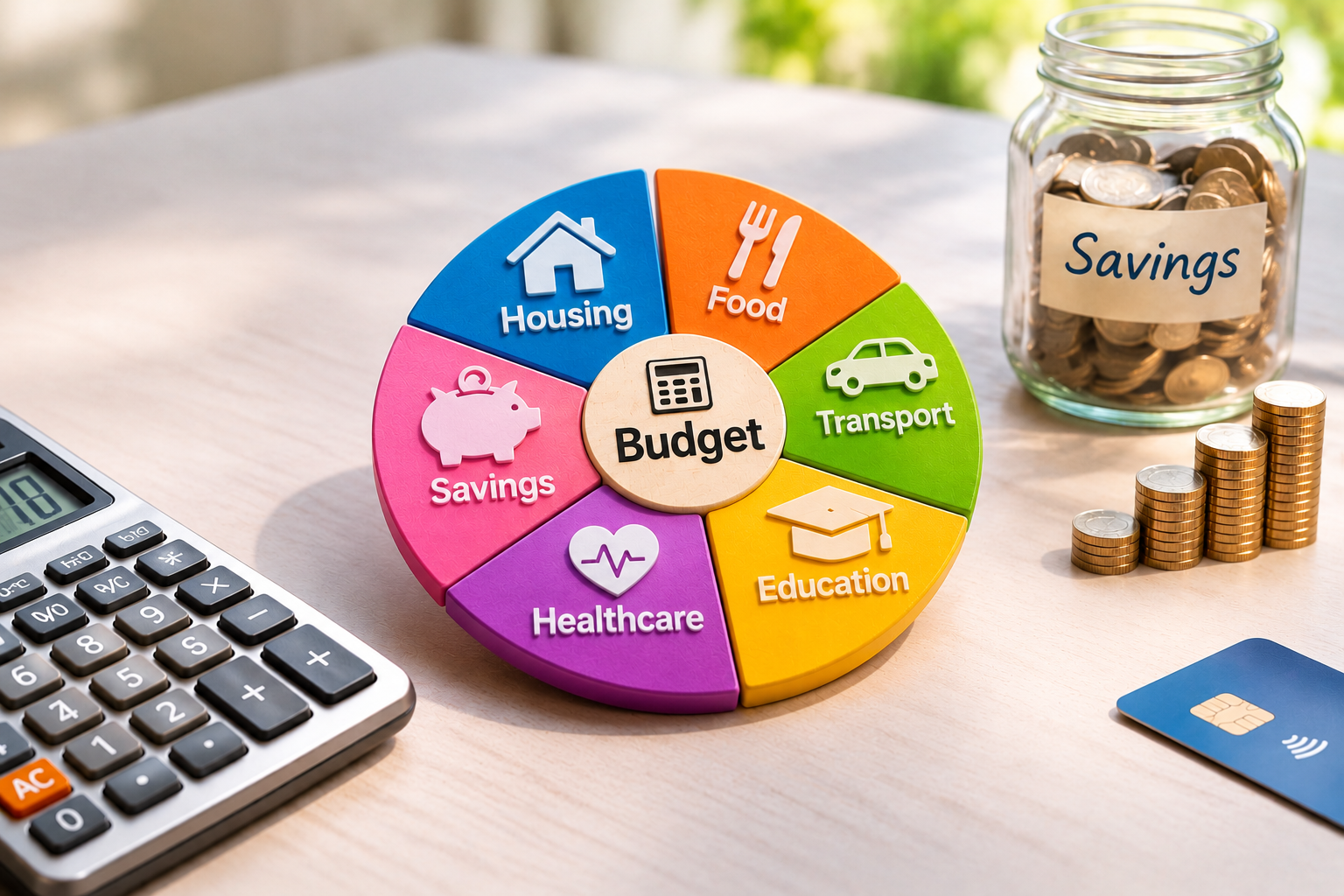
Personal Finance and Money Management is about making informed decisions with the money you earn, spend, save, borrow and invest. It affects everyday choices, from paying household bills and managing credit cards to preparing for unexpected expenses and building financial security over time.
For UK households, effective money management starts with understanding take-home income, essential commitments and the financial products available. You do not need specialist financial knowledge to begin, but understanding basic concepts can help you avoid expensive mistakes and make more confident decisions.
CIFA, a financial education and professional-development provider, offers learning resources covering financial planning, investments, accounting and financial regulation. This guide focuses on practical financial decisions, with relevant educational resources introduced where they support a deeper understanding.
Personal finance covers the financial decisions made by individuals and households. Its main areas include income, expenditure, savings, borrowing, investments, financial protection and retirement planning.
Financial literacy means understanding these subjects well enough to assess choices and recognise their consequences.
For example, knowing the difference between an interest rate and an annual percentage rate (APR) can help when comparing borrowing costs. Understanding inflation explains why money may buy less over time, while knowledge of investment risk helps distinguish potential returns from guaranteed outcomes.
For anyone exploring personal finance for beginners, the objective is not to master every financial product immediately. It is to understand your current position and develop habits that support informed decisions.
Income represents money received from employment, self-employment or other sources. Expenses are the costs of living and personal spending. Savings are funds set aside for future use, while debt represents money owed under agreed repayment terms.
Financial planning brings these elements together so that short-term decisions do not undermine longer-term needs.
Learning how to manage money begins with establishing a clear picture of what comes into your household and where it goes.
Start with the amount you actually receive after deductions, rather than your advertised annual salary. Review bank statements, payslips, standing orders and direct debits to identify regular commitments.
Next, distinguish essential expenditure from discretionary spending. Rent, mortgage payments, groceries and necessary travel usually take priority. Entertainment, dining out and optional subscriptions provide more flexibility, although a sustainable plan can still make room for enjoyable activities.
Consider annual costs as well as monthly bills. Car insurance, Christmas spending, school expenses and appliance replacement can create financial pressure if they are ignored until payment is due.
Once you understand these commitments, decide what you can reasonably allocate towards debt repayment, emergency savings and longer-term goals.
Review your position monthly. A manageable routine is more useful than an ambitious financial plan that cannot be maintained.
Understanding how to create a monthly budget involves assigning realistic amounts to spending categories and checking whether your total commitments fit within your available income.
Begin by calculating your average monthly take-home income. Include wages, reliable self-employment earnings and other regular income where applicable. Avoid relying on occasional bonuses or uncertain overtime to cover essential bills.
For irregular income, consider building the budget around a conservative monthly figure based on lower-earning periods. Additional income can then support savings, outstanding commitments or planned expenses.
Fixed expenses are payments that usually remain consistent over a period, such as rent, mortgage instalments, insurance premiums and contractual subscriptions.
Variable expenses change according to usage or purchasing decisions. These include groceries, transport, energy bills, clothing and leisure spending.
Some essential costs are variable. Electricity is necessary, but the amount charged may change. Conversely, a fixed subscription may be discretionary.
A useful budget therefore considers both the type of expense and how important it is to your household.
The following example is illustrative only. It is not an estimate of average UK household spending or a recommendation for every reader.
In this example, housing represents the largest commitment, while £250 is allocated to savings and £100 remains available for smaller unexpected costs.
Someone living in London may face substantially different housing costs from someone in a smaller town. Families, single-person households and people with caring responsibilities also have different spending patterns.
Adjust the amounts to reflect your circumstances rather than trying to match the example exactly.
Budgeting becomes more effective when planned figures are compared with actual transactions. If groceries consistently cost £340 instead of £300, revise the category or identify realistic changes elsewhere.
Understanding financial records can also be useful beyond household budgeting. CIFA offers an accounting and finance skills course covering financial statements, budgeting, cost accounting, investment appraisal and financial analysis in a business context. It is professional education, not a household budgeting service.
Budgeting and saving money work together. A budget identifies what may be available to save, while a savings plan gives that money a specific purpose.
Savings can support planned purchases, annual expenses and financial emergencies. Keeping these purposes separate helps prevent money reserved for essential needs from being spent unintentionally.
An emergency fund is money set aside for unexpected essential costs or a temporary loss of income.
Examples include urgent household repairs, replacing an essential appliance, unexpected necessary travel or covering bills while between jobs.
For emergency fund planning, MoneyHelper commonly recommends a reserve of approximately three to six months of essential living expenses.
If essential expenses total £1,500 monthly, this guideline would suggest an eventual target of £4,500 to £9,000.
That is not a compulsory savings requirement. A household with variable earnings or several dependants may need a larger reserve, while someone with stable income and reliable support may assess their needs differently.
If several months of savings are unrealistic, begin with a smaller amount. Saving £20 or £50 consistently can help establish the habit and provide some protection against smaller unexpected expenses.
Consider interest rates, withdrawal access, minimum balances, account conditions and whether the interest rate is fixed or variable.
Easy-access accounts may be suitable for emergency reserves, while fixed-term products can restrict withdrawals.
Check whether eligible deposits are protected by the Financial Services Compensation Scheme (FSCS). As of November 2026, the standard FSCS deposit protection limit is £120,000 per eligible person, per authorised institution. Different banking brands may share the same banking licence.
Tax treatment also matters. Interest outside an ISA may be taxable depending on personal circumstances and applicable allowances.
Automating transfers shortly after payday can make saving more consistent, provided enough remains available for essential payments.
Borrowing is part of many household financial plans. Mortgages, student loans, credit cards, personal loans, overdrafts and buy-now-pay-later agreements serve different purposes and carry different obligations.
Debt should be assessed according to affordability, interest rates, repayment terms, fees and the consequences of missed payments.
A mortgage may support home ownership but creates a substantial long-term commitment. Credit cards can provide payment flexibility, yet carrying an interest-bearing balance may become expensive.
Effective debt management strategies begin with a complete record of what you owe.
Identify each balance, interest rate, required payment, due date and any arrears.
Prioritise debts according to the consequences of non-payment. Mortgage or rent arrears, council tax, certain utility arrears and court-related debts may carry particularly serious consequences.
Where affordable, maintain required minimum payments and consider directing additional money towards expensive borrowing.
The debt avalanche method focuses extra repayments on the highest-interest debt first. The debt snowball method prioritises smaller balances to create manageable milestones. Neither approach overrides the need to deal with priority debts and essential living costs.
Debt consolidation and balance transfers may sometimes reduce costs, but fees, promotional periods, eligibility and total repayment amounts must be assessed carefully.
If repayments are becoming unaffordable, contact creditors early and seek free, reputable guidance through MoneyHelper's debt-advice services or an appropriate debt-advice charity.
Knowing how to improve credit score starts with understanding the difference between a credit report and a credit score.
A credit report contains information about borrowing accounts, payment history, outstanding balances and certain public records.
A credit score is an indicator calculated using a particular scoring model. Experian, Equifax and TransUnion use different systems, and lenders may apply their own affordability and creditworthiness assessments.
There is no single universal UK credit score that every lender uses identically.
Check your credit reports for inaccuracies and request corrections where necessary. Pay commitments on time, maintain accurate personal details and register on the electoral roll at your correct address if eligible.
Avoid making numerous unnecessary credit applications within a short period and monitor outstanding credit balances.
These habits may support healthier credit records, but they do not guarantee a particular score or borrowing approval.
The distinction between saving vs investing is fundamental to financial planning.
Saving generally involves keeping money in bank or building society deposit products. The balance is usually more predictable, although inflation may reduce its purchasing power.
Investing involves purchasing assets whose values can rise or fall. Potential returns may be higher over longer periods, but capital losses are possible.
Money needed for bills, emergencies or near-term purchases generally requires accessibility and relatively low risk.
For example, funds reserved for a home deposit needed within a year may be unsuitable for investments exposed to substantial short-term market volatility.
Investments can include shares, bonds, investment funds and exchange-traded funds (ETFs).
Shares represent ownership interests in companies. Bonds generally represent lending to an issuer. Funds can hold collections of investments, helping investors spread exposure across different assets.
Diversification can reduce concentration risk but cannot eliminate the possibility of losses.
Fees, investment time horizon, liquidity and personal risk tolerance all matter. Investment values can fall as well as rise, and past performance does not guarantee future results.
Readers interested in the underlying mechanics of financial markets can explore CIFA's securities and investment course, which covers equities, bonds, investment funds, derivatives, financial markets and regulation.
For a more detailed examination of portfolio construction, asset classes, taxation and risk, its investment risk and taxation course addresses these subjects in an educational context.
An Individual Savings Account (ISA) is a UK tax-efficient account arrangement.
Cash ISAs generally hold savings, while Stocks and Shares ISAs hold eligible investments. ISA interest, income and gains normally benefit from the applicable UK tax advantages.
For the 2026/27 tax year, running from 6 April 2026 to 5 April 2027, the overall adult ISA subscription allowance is £20,000, subject to eligibility and product-specific rules.
A Stocks and Shares ISA does not remove market risk. The tax wrapper affects taxation, not the underlying investment's potential for loss.
Investors should check current HMRC guidance before contributing, particularly where age restrictions, ISA types or residency conditions apply.
Environmental, social and governance (ESG) considerations may influence how investors assess businesses and funds.
However, ESG labels, ratings and investment methodologies can differ. An ESG-related investment is not necessarily lower risk or guaranteed to achieve particular environmental outcomes.
For readers interested in the analytical aspects, CIFA offers ESG investment strategies education covering ESG analysis, green bonds, impact investing, governance and environmental risk.
Financial goals become more manageable when they are specific and measurable.
The SMART framework means Specific, Measurable, Achievable, Relevant and Time-bound.
Instead of deciding simply to save more, someone might aim to save £1,200 over twelve months by setting aside £100 each month.
The target should reflect actual affordability. If essential costs rise, revising the amount is more practical than allowing the plan to become unmanageable.
Short-term goals may include emergency savings and annual expenses. Medium-term goals could involve education, a vehicle replacement or a property deposit. Long-term planning often includes retirement and financial security later in life.
A workplace pension allows eligible employees to build retirement savings, often with contributions from their employer.
Under current UK automatic-enrolment rules, employers generally must enrol eligible workers aged 22 to State Pension age who ordinarily work in the UK and earn at least £10,000 annually.
For many qualifying workplace pension schemes, the minimum total contribution is 8% of qualifying earnings, including at least 3% from the employer. Scheme arrangements and contribution calculations can differ.
People who do not meet automatic-enrolment criteria may still have rights to join a workplace pension.
Personal pensions offer another way to save for retirement, while the State Pension depends on eligibility and an individual's National Insurance record.
The GOV.UK State Pension forecast service can help individuals understand their expected entitlement and State Pension age.
For people seeking wider professional knowledge of investment portfolios and long-term wealth decisions, CIFA offers wealth management foundations, a learning bundle covering securities and investment, financial regulation, and investment risk and taxation.
Financial protection helps households manage the financial consequences of particular events.
Life insurance may provide a payment following the insured person's death. Income protection can provide income replacement under specified conditions when illness or injury prevents work.
Buildings and contents insurance address different property-related risks.
Not everyone needs every type of insurance. Cover depends on dependants, employment benefits, existing savings, housing arrangements, exclusions and affordability.
Before purchasing a policy, review its terms, waiting periods, coverage limits and exclusions.
Useful money management tips should be realistic enough to become routine.
Before making a discretionary purchase, consider whether it fits your budget and whether waiting a day or two would change your decision.
Review subscriptions periodically. Small recurring payments can accumulate, particularly when services are no longer used.
Check direct debits and standing orders against your records. Plan essential purchases where possible and compare household costs such as insurance and utilities when contracts are due for renewal.
Avoid relying on high-interest borrowing for routine spending. If borrowing becomes necessary, understand the full repayment cost rather than focusing only on the monthly instalment.
Use financial apps and online banking securely. Enable multi-factor authentication where available, protect passwords and avoid sharing account credentials.
Be cautious of investment offers promising unusually high returns or creating pressure to act immediately. Check the FCA's information about financial scams and verify firms through appropriate official registers.
The objective is to make how to manage money a repeatable process, not a constant exercise in restricting every purchase.
A personal budget planner can be a spreadsheet, printable worksheet, secure digital tool or simple written record.
It should capture monthly take-home income, fixed bills, variable expenses, debt repayments, savings contributions, financial goals and a buffer for unexpected costs.
Include both planned and actual spending columns. The difference between them shows where adjustments may be needed.
For example, suppose someone budgets £120 monthly for subscriptions and discretionary digital purchases but discovers that £35 relates to services they rarely use.
Cancelling those services could free £35 each month. Over twelve months, that would amount to £420, assuming the spending would otherwise continue.
That money could contribute towards an emergency reserve or an existing repayment plan.
The same approach works with annual expenses. Divide a predictable yearly bill by twelve and reserve an affordable amount each month.
A planner should be updated as circumstances change. Its value comes from the decisions it supports, not from the complexity of the software.
One common mistake is planning around an ideal month rather than actual spending. An unrealistic budget can overlook necessary costs and leave insufficient money for ordinary life.
Another is ignoring irregular expenses. Annual insurance premiums, repairs and seasonal commitments should be anticipated where possible.
Expensive borrowing can also undermine progress when balances remain unpaid and interest accumulates. Reviewing repayment terms and seeking help early can prevent difficulties from becoming more serious.
Investing without understanding risk creates different problems. A product's past performance or promotional material cannot establish its future returns.
Failing to review credit reports, pension arrangements and financial goals may mean important changes go unnoticed.
Financial products should also be assessed for fees, restrictions and conditions before purchase.
A more reliable approach is to review one area at a time, identify the most consequential issue and make an achievable improvement.
CIFA provides financial education and professional-development programmes relevant to people seeking deeper knowledge of financial planning, investment markets, accounting and financial-services practice.
Its CIFA's financial education platform introduces a range of digital finance-related courses and certifications.
The Financial Planning and Advice course covers financial-planning principles, financial protection and retirement planning. These subjects connect directly with household decisions about long-term goals, insurance and future income.
The Financial Advisor Certification (FAC) is a separate three-course bundle covering Financial Planning and Advice, Introduction to UK Financial Regulation and Professional Integrity, and Introduction to Investment, Risk and Taxation.
Readers exploring broader professional education can review the financial advisor certification programme.
For those considering investment-related professional study, CIFA also provides investment advisor certification, combining financial regulation, investment risk and taxation, and derivatives education.
These programmes support learning. Their completion does not automatically grant FCA authorisation or permission to provide regulated investment advice.
Professional conduct is another important subject. CIFA's UK financial regulation course covers ethics, financial-services regulators, governance, competence, financial crime and complaints.
Understanding these areas can be useful for people interested in financial-services careers, although everyday personal budgeting does not require enrolment in a professional course.
The most relevant educational starting point depends on what a reader wants to understand.
Someone interested in managing household finances may first benefit from practising budgeting, reviewing savings arrangements and learning about credit and debt.
A reader interested in financial planning as a professional subject may want to explore the financial-planning process, insurance, retirement provision and investment principles in greater depth.
CIFA provides learning options across these areas, including individual courses and broader certification bundles.
Its education is most appropriately considered as supplementary learning rather than a substitute for personalised advice, regulated professional qualifications or official consumer guidance.
Readers should compare course descriptions, learning outcomes and any associated costs against their actual objectives before enrolling.
This article is intended for general financial education and information only. It does not constitute personalised financial, investment, tax, legal or debt advice. Financial circumstances and product terms vary, so readers should check current official guidance and consider speaking with an appropriately qualified professional before making significant financial decisions.
Effective Personal Finance and Money Management involves understanding income, organising spending, managing debt, building savings and recognising the risks associated with investment decisions.
A realistic budget provides a starting point. Emergency savings offer additional resilience, while informed borrowing, financial protection and retirement planning help address longer-term needs.
Financial plans should evolve with income, family responsibilities and changing priorities.
CIFA offers educational resources covering financial planning, investment, accounting and related professional subjects for readers who wish to develop their understanding further.
The most useful next step is to review your current financial position, choose one manageable improvement and continue building knowledge as your circumstances and goals develop.


0 comments