
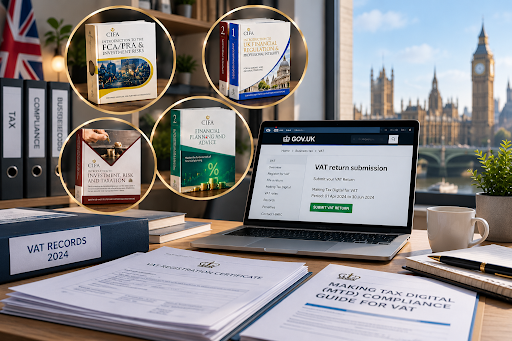
Accounting knowledge is not only useful for professional accountants. Small business owners need to understand where their money goes, managers must evaluate budgets, and employees working with financial information often need to interpret reports without relying entirely on their finance departments.
Accounting for Non-Accountants provides a practical starting point for people who want to understand financial information without necessarily pursuing a professional accounting qualification. Learning how revenue, expenses, assets, liabilities and cash flow work can help individuals interpret business performance and participate more confidently in financial discussions.
For UK learners, online education offers several routes, from free introductory resources to structured accounting courses and professional qualification pathways. The appropriate choice depends on existing knowledge, learning objectives, available study time and budget.
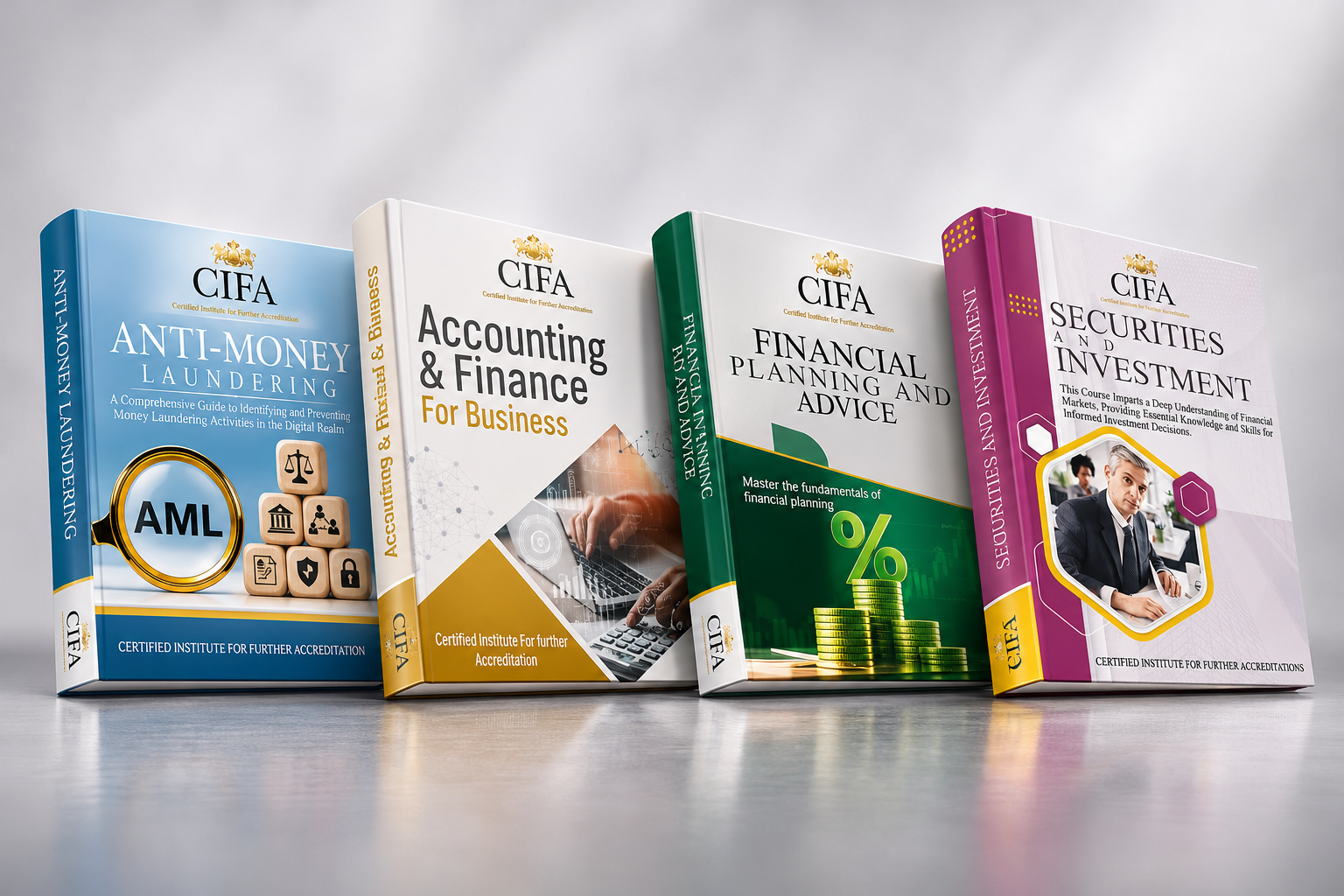
CIFA offers financial education through its Accredited Online Courses, including Accounting and Finance for Business and the Introduction to Compliance and Accountancy for Business (ICAB) certification bundle.
These programmes serve different learning needs. The standalone course concentrates on accounting and business finance, while ICAB combines accounting with regulatory awareness, professional integrity and Anti-Money Laundering education.
Understanding these differences is important before investing in any course.
Accounting is the process of recording, organising, summarising and interpreting financial transactions to understand an organisation's financial position and performance.
For professional accountants, this may involve preparing financial statements, maintaining records, applying accounting standards and fulfilling reporting responsibilities. Non-accountants, however, often need a practical understanding of the information rather than the ability to perform every technical accounting function.
A business owner might need to understand why sales are increasing while available cash is declining. A department manager may need to explain why expenditure exceeded a budget. An entrepreneur might want to estimate whether a new product could cover its operating costs.
These situations require financial literacy rather than necessarily requiring a professional accounting qualification.
An accounting for non-accountants course typically introduces financial terminology, financial statements, business costs, budgeting, financial planning and the interpretation of financial information.
The objective is to help learners understand what financial figures represent and how they can support decisions.
For example, recognising the difference between revenue and profit can prevent a manager from assuming that strong sales automatically indicate financial success.
Similarly, understanding liabilities can help a business owner recognise financial obligations that may not be immediately apparent from the bank balance.
CIFA's Accounting and Finance Course covers financial statements, budgeting, investment appraisal and cost accounting.
However, completing an introductory course does not automatically make someone a qualified accountant. Formal accounting careers may require additional education, professional examinations and relevant practical experience.
Developing financial literacy begins with understanding how financial information is organised and what it reveals about a business.
The following concepts provide a foundation for interpreting accounts and participating in financial decisions.
A balance sheet presents an organisation's financial position at a particular date.
It contains three principal elements: assets, liabilities and equity.
Assets are resources controlled by the business, such as cash, equipment, inventory and amounts owed by customers.
Liabilities represent obligations, including loans, unpaid supplier invoices and other amounts the organisation must settle.
Equity represents the residual interest in the business after liabilities are deducted from assets.
The fundamental accounting relationship is:
Assets = Liabilities + Equity
Consider a business with assets worth £100,000 and liabilities of £40,000. Its equity would be £60,000.
This simplified example demonstrates how the balance sheet connects the resources of a business with its financial obligations and ownership interest.
However, a balance sheet does not independently establish whether a business is profitable or whether it will have sufficient cash to meet future payments.
An income statement, also called a profit and loss statement, summarises revenue, expenses and profit or loss over a particular accounting period.
Revenue represents income generated through business activities, while expenses represent the costs incurred in generating that income and operating the organisation.
Profit is the amount remaining after relevant expenses have been deducted from revenue.
For example, a business generating £80,000 in revenue and incurring £65,000 in expenses would report £15,000 in profit in this simplified illustration.
The distinction is important because high revenue does not necessarily indicate strong profitability.
A business may increase sales while experiencing rising staffing costs, supplier prices or overheads.
For people interested in understanding financial statements for beginners, learning to interpret income statements is particularly useful because it helps connect business activity with financial performance.
Cash flow describes money moving into and out of a business.
It differs from accounting profit because revenue and expenses may be recognised at different times from the associated cash receipts and payments.
Suppose a consultancy completes £5,000 of work and issues an invoice payable in 30 days.
Under accrual accounting, the business may recognise revenue when the service has been delivered, even though the customer has not yet paid.
The income statement may therefore show revenue while the bank account remains unchanged.
This distinction explains why a profitable business can still experience cash-flow difficulties.
Cash-flow analysis helps managers understand payment timing, working-capital requirements and the availability of funds for operating expenses.
A budget sets out a financial plan for a defined period.
It may establish expected revenue, departmental expenditure, staffing costs, marketing spending or other financial commitments.
Forecasting uses available information and assumptions to estimate future financial performance.
For example, a retailer may forecast sales using historical results, seasonal patterns and anticipated changes in customer demand.
Actual performance can then be compared with the budget or forecast to identify differences requiring investigation.
Forecasts are not guarantees. They should be reviewed when circumstances change or assumptions prove inaccurate.
Understanding budgeting is an important part of accounting basics for beginners UK, particularly for people responsible for business expenditure.
Cost accounting helps organisations understand the expenses associated with products, services and business activities.
Fixed costs generally remain unchanged within a relevant activity range, while variable costs change with the level of production or sales.
For example, monthly premises rent may be a fixed cost, while packaging costs may increase as more products are sold.
Contribution margin is the amount remaining from sales revenue after variable costs have been deducted. It contributes towards covering fixed costs and, subsequently, profit.
These concepts are relevant to financial accounting for non-finance managers because they help explain pricing, cost control and operational decisions.
However, financial measures should be considered alongside quality, customer expectations, capacity and wider business objectives.
Accounting and compliance are closely connected, but they serve different purposes.
Accounting focuses on financial records, transactions, reporting and performance. Compliance concerns adherence to applicable laws, regulations, internal policies and professional standards.
Accurate financial records can support effective compliance processes, while appropriate controls help organisations reduce errors, identify unusual activity and maintain accountability.
Professional integrity is also important. Employees handling financial information should understand the importance of honesty, confidentiality, accurate reporting and responsible decision-making.
Anti-Money Laundering, commonly abbreviated as AML, refers to measures intended to prevent criminals from disguising the origins of illegally obtained funds.
In relevant regulated settings, AML responsibilities may involve customer due diligence, assessing financial-crime risks, maintaining appropriate records and following procedures for potentially suspicious activity.
The precise obligations depend on the organisation, activity and applicable legal requirements.
Not every business or employee has identical AML duties, and introductory education should not be treated as a substitute for organisation-specific compliance procedures or legal advice.
An accounting and compliance course UK may be relevant to people who want to understand both financial information and the responsibilities associated with handling it.
The CIFA Introduction to Compliance and Accountancy for Business (ICAB) bundle combines three related courses.
The first, Introduction to UK Regulations and Professional Integrity, introduces regulatory principles, ethical expectations and the responsibilities associated with professional conduct.
The second, Introduction to Accounting and Finance for Business, covers financial statements, budgeting, financial terminology and business decision-making.
The third, Anti-Money Laundering, addresses financial-crime risks, customer due diligence, risk assessment and suspicious activity reporting.
The Compliance and Accountancy Certification is published as a digital, three-course bundle costing £897, with a listed duration of 230 hours.
For learners whose primary interest is financial-crime prevention, the separate Anti-Money Laundering Course may offer a more focused learning option.
Neither programme automatically grants professional accounting status or authorisation to undertake regulated activities.
Choosing among the best online accounting courses UK requires more than comparing course titles or advertised prices.
The syllabus should be the first consideration. A course concentrating on financial literacy may be appropriate for a manager, while someone pursuing a professional accounting career may require a recognised qualification pathway.
Course level matters equally.
A programme described as Intermediate may assume familiarity with concepts that a complete beginner has not yet studied. Learners should examine the actual syllabus and ask the provider about entry expectations.
Delivery format and study commitment also affect suitability.
An online accounting course for beginners may offer self-paced reading, recorded materials, exercises or formal assessments. However, these features vary between providers.
Learners should confirm which resources are included, whether examinations carry separate fees and what conditions apply to certificates.
An accounting course with certificate may provide evidence of completed learning, but the certificate's professional significance depends on the awarding organisation, programme and applicable recognition requirements.
CPD-related learning is also distinct from a formal professional accounting qualification.
These options are not interchangeable.
A short financial education course may be appropriate for understanding business accounts, while a professional qualification pathway serves a different purpose and may involve additional examinations and practical experience.
CIFA offers two relevant options for readers considering accounting and compliance education.
The standalone course costs £499 and lists approximately 30 study hours, identified as 30 CPD hours.
It is classified as Intermediate, delivered digitally and taught in English.
Its published syllabus covers Introduction to Accounting, Financial Statements and End of Year Adjustments, Interpretation of Financial Statements, Investment Appraisal Methods, Budgeting, Cost Accounting-Marginal Costing System and Applications of Marginal Costing.
These subjects address how financial information is prepared, interpreted and used in business decisions.
The course includes e-book chapters, mock examinations for each chapter, lifetime portal access and a Digital Profile.
A Certificate of Achievement is available after successful completion and passing the examination.
PowerPoint presentations and prerecorded webinars are additional-charge resources rather than included elements of the £499 enrolment fee.
The official fee schedule lists the optional study-support package at £72.
This course may be relevant to readers who want to learn accounting without a degree, although its Intermediate classification means complete beginners should assess whether introductory preparation would be helpful.
ICAB offers a broader learning route.
Its £897 enrolment price covers the three-course bundle, with 230 hours listed for the combined programme.
The additional subjects introduce regulatory frameworks, professional integrity and AML alongside accounting and finance.
This makes the bundle potentially relevant to people whose responsibilities involve financial administration, compliance awareness or work in regulated environments.
The three individual courses are listed at £499 for accounting, £358 for UK financial regulation and £499 for AML.
Their combined individual enrolment prices total £1,356, compared with the £897 bundle fee, a difference of £459 before additional study support and assessment charges.
However, this price comparison should not determine the decision by itself.
Someone interested only in accounting fundamentals may not need the additional regulatory and AML material.
Conversely, a learner seeking education across all three subjects may find the combined programme more appropriate.
Beyond accounting, CIFA provides separate programmes addressing particular financial and regulatory subjects.
The UK Financial Regulation Course covers professional ethics, financial regulation, governance and the responsibilities associated with UK financial services.
The AML and Compliance Certification combines financial regulation and AML education. It is more focused on compliance than the accounting-oriented standalone programme.
For readers interested in technology-related financial services, the FinTech and Compliance Certification combines regulatory and AML subjects with investment-risk education within a financial-technology context.
The FCA and PRA Certification addresses financial regulation and investment-risk principles rather than general accounting education.
These options serve different learning objectives. Learners should select subjects according to their responsibilities and interests rather than assuming that completing multiple courses is necessary.
A suitable accounting course should match the learner's existing knowledge, professional responsibilities and available resources.
Define your learning goal. Decide whether you need financial literacy for business management, the ability to interpret accounts, support with budgeting or broader accounting and compliance knowledge. A clear objective helps prevent unnecessary study expenditure.
Assess your current knowledge. Consider whether you understand revenue, expenses, assets, liabilities, profit and cash flow. If these concepts are unfamiliar, begin with introductory materials before committing to an Intermediate programme.
Compare the syllabus and level. Examine the actual subjects, learning resources, expected study hours, assessment requirements and certificate conditions. Do not assume that every course advertised for beginners starts at the same level.
Compare the full cost. Review enrolment fees, optional study support, examinations and other applicable charges. CIFA's published CIFA Course Fees schedule distinguishes enrolment fees from additional study-support and examination costs.
Choose the course that matches your goal. Consider accounting-focused learning if financial statements and business finance are your priorities. Choose broader compliance education only if the additional subjects are relevant. Compare professional qualification pathways separately if your objective is to become a qualified accountant.
Free educational resources can be a sensible starting point for learners who want to understand accounting terminology and explore whether the subject interests them.
Introductory materials may explain double-entry bookkeeping, financial statements, budgeting and basic business calculations.
However, the quality, structure, exercises and assessment opportunities vary.
Paid programmes may offer organised chapters, defined learning outcomes, examinations and certificates, depending on the provider.
These features can be useful for learners who prefer a structured study plan, but payment alone does not guarantee educational quality or professional recognition.
Readers comparing accounting and financial education can explore CIFA's Online Finance Courses alongside independent introductory resources and recognised professional qualification providers.
Accounting education can support several types of learners, even when becoming a professional accountant is not their objective.
For people exploring accounting for small business owners UK, understanding financial records can support day-to-day business oversight.
Business owners may need to monitor customer payments, supplier expenses, cash reserves and operating costs.
Financial literacy also helps them ask informed questions when working with accountants or bookkeepers.
However, understanding accounting concepts does not remove the need for professional advice where specialist tax, reporting or legal obligations apply.
Managers responsible for departmental budgets may need to understand expenditure, financial forecasts and differences between planned and actual performance.
Accounting knowledge can improve communication with finance departments and support more informed resource discussions.
Introductory financial education can help graduates and career changers become familiar with business terminology and assess whether further accounting study suits their interests.
It does not automatically satisfy the requirements for professional accounting positions.
Employees working with invoices, financial records, customer onboarding or internal controls may benefit from understanding accounting principles and relevant compliance responsibilities.
The required depth of knowledge depends on the organisation and individual role.
Continuing Professional Development, or CPD, refers to learning undertaken to maintain or develop professional knowledge and skills.
CIFA's standalone Accounting and Finance for Business course lists 30 CPD hours.
These hours describe the course's published professional development duration. They should not be confused with membership of a professional accounting body or a formal accounting qualification.
The course page states that learners receive a Certificate of Achievement after successfully completing the programme and passing the examination.
A certificate is therefore not automatically awarded upon payment or enrolment.
The official CPD-Accredited Certifications information explains CIFA's relationship with the CPD Certification Service.
However, CPD accreditation does not automatically confer AAT, ACCA or ICAEW status, chartered accountant designation or authorisation to undertake regulated professional activities.
The recognition of learning activities may also depend on an employer's or professional organisation's requirements.
Before enrolling, readers should confirm the relevant course's assessment arrangements, certificate conditions and any additional charges.
The official CIFA Support page provides further information about learning arrangements, examinations and study resources.
For questions not addressed in the published information, learners can Contact CIFA directly before purchasing a programme.
Learning accounting does not require everyone to pursue a full professional accounting qualification.
Business owners, managers, graduates and other professionals can benefit from understanding financial statements, cash flow, budgeting and the financial information used in everyday decisions.
The most appropriate learning route depends on the learner's existing knowledge, responsibilities and intended outcomes.
For readers primarily interested in accounting fundamentals, CIFA's Accounting and Finance Course provides structured education covering financial statements, budgeting, cost accounting and investment appraisal.
For learners who also want UK regulatory, professional-integrity and AML knowledge, the Compliance and Accountancy Certification offers a wider three-course programme.
These are distinct educational options with different fees, durations and subject coverage.
Before choosing either programme, review the current syllabus, course level, study commitment, examination conditions and full cost.
The right course is the one that develops knowledge relevant to your needs, whether that means understanding business finances more confidently or preparing for further structured study.

0 comments