

The UK financial services industry continues to evolve as regulations become more robust, technology reshapes investment practices, and employers seek professionals with practical knowledge alongside academic qualifications. Whether you are a graduate, an aspiring financial adviser, a compliance professional, or someone looking to transition into finance, choosing the right qualification can significantly influence your career path.
One question frequently asked by aspiring professionals is Is cifa certification worth it? The answer depends on your career goals, but for many individuals seeking practical knowledge, industry-relevant skills, and flexible learning, the value of a recognised certification is substantial.
In today's competitive employment market, employers increasingly value candidates who demonstrate initiative through continuous professional development. A professional certification shows commitment to learning, strengthens technical expertise, and helps candidates stand out during recruitment and promotion opportunities.
This guide explores every aspect of whether cifa certification worth it, including career advantages, industry recognition, practical skills, long-term value, and how CIFA supports learners preparing for successful careers within the UK's financial sector.
Financial services remain one of the UK's most competitive industries. Banks, investment firms, mortgage providers, wealth management companies, insurance businesses, and compliance departments all seek professionals with up-to-date knowledge.
Traditional university education provides a strong academic foundation, but employers also value candidates who understand current industry practices, financial regulations, investment principles, and client expectations.
This growing demand explains why so many professionals search for cifa certification worth it before enrolling in a programme.
A professional certification offers more than a certificate itself. It demonstrates that an individual has invested time in understanding financial markets, regulation, compliance requirements, investment concepts, and professional ethics. These are qualities employers consistently look for when hiring across financial services.
The finance industry rewards continuous learning. Regulations change, investment products evolve, and customer expectations continue to rise. Professionals who regularly update their knowledge often remain more competitive than those relying solely on previous education or work experience.
For individuals planning a long-term career in finance, earning a recognised qualification can provide several advantages beyond technical knowledge.
A recognised finance certification UK demonstrates commitment to professional development. Recruiters often prefer candidates who actively invest in expanding their expertise because it reflects motivation, discipline, and industry awareness.
Professional certifications also give employers greater confidence that candidates understand current financial concepts and regulatory expectations.
Many finance professionals discover that real-world work differs significantly from university theory.
Courses covering investment advice, financial regulation, compliance, derivatives, risk management, mortgages, and wealth management help learners understand how financial services operate in practice.
This practical knowledge becomes valuable during interviews and everyday work responsibilities.
Learning structured financial concepts increases confidence when analysing investment opportunities, understanding financial products, discussing regulations, or supporting clients.
Confidence often translates into stronger interview performance, better workplace communication, and improved decision-making.
Selecting the right learning provider is just as important as choosing the right certification.
Through CIFA, learners can access programmes designed to introduce essential concepts within financial services while supporting continuous professional development.
Rather than focusing only on theory, quality professional education helps learners understand practical applications that employers value across different finance roles.
Students typically strengthen knowledge in areas such as:
Understanding UK financial regulations helps professionals appreciate how financial institutions operate responsibly while protecting customers and maintaining market integrity.
Regulatory awareness is increasingly valuable across banks, investment firms, insurance companies, and advisory businesses.
Investment knowledge remains one of the most transferable skills within financial services.
Professionals benefit from understanding:
Portfolio fundamentals
Asset allocation
Risk management
Investment products
Long-term investment planning
Market behaviour
These concepts support careers across investment management, financial advice, and wealth management.
Compliance has become one of the fastest-growing areas within financial services.
Businesses require professionals who understand governance, regulatory expectations, ethical conduct, and financial crime prevention.
Learning compliance principles improves employability across numerous financial roles.
Career progression rarely depends upon experience alone.
Employers increasingly evaluate candidates using several factors, including:
Professional qualifications
Industry knowledge
Communication skills
Technical competence
Regulatory understanding
Continuous professional development
A recognised professional finance certification demonstrates that an individual actively develops these capabilities.
Professionals who continue learning often become stronger candidates for internal promotions because they remain informed about changing regulations, financial products, and industry developments.
In competitive recruitment processes, additional qualifications can also differentiate applicants with similar educational backgrounds or work experience.
One reason people ask whether cifa certification worth it is because finance attracts professionals from many different backgrounds.
A professional certification may be particularly valuable for:
Students preparing for careers in finance can strengthen their CV before graduation.
Employers frequently appreciate applicants who have developed practical knowledge beyond academic coursework.
Many professionals move into finance from industries such as accounting, administration, customer service, retail, business management, or technology.
Professional certification provides structured learning that helps bridge knowledge gaps while building confidence for a successful transition.
Existing professionals can continue expanding their expertise through specialised learning.
Continuous development supports long-term career growth while helping professionals remain current with evolving industry standards.
One of the strongest reasons professionals ask whether cifa certification worth it is the practical skills they can gain. While qualifications are important, employers across the UK increasingly look for candidates who can apply knowledge in real business situations.
Modern financial services require professionals who understand regulations, investment products, customer needs, risk management, and ethical decision-making. A structured certification helps learners develop these competencies while building confidence to work in a professional environment.
Unlike purely academic learning, professional education focuses on the knowledge that is directly relevant to today's financial workplace. This combination of theory and practical understanding makes certification valuable for both newcomers and experienced professionals.
Finance professionals regularly analyse data, evaluate financial products, identify risks, and interpret market trends.
Developing analytical skills enables professionals to:
Assess investment opportunities
Understand financial reports
Evaluate business performance
Support informed decision-making
Recognise potential financial risks
These abilities are valuable across investment firms, banks, wealth management companies, and advisory businesses.
Technical knowledge alone is not enough.
Professionals must explain financial concepts clearly to clients, colleagues, and stakeholders. Whether discussing investment options or regulatory requirements, effective communication builds trust and supports better financial decisions.
The UK financial sector places significant emphasis on ethics and professional conduct.
Understanding ethical responsibilities helps professionals protect clients, maintain compliance, and contribute positively to their organisations.
Ethical behaviour is often regarded as one of the most valuable characteristics employers seek when recruiting finance professionals.
Recruitment within financial services has become increasingly competitive.
Many candidates possess similar academic qualifications, making additional certifications an effective way to demonstrate commitment to professional development.
Employers often recognise that candidates who complete professional learning programmes are more likely to:
Stay informed about industry developments
Adapt to regulatory changes
Learn independently
Develop practical financial knowledge
Show initiative beyond mandatory education
Although no certification guarantees employment, investing in professional education can strengthen a candidate's overall profile during recruitment.
For hiring managers, certifications also indicate that applicants are willing to continuously improve their knowledge—an important quality in a rapidly evolving industry.
Many aspiring finance professionals consider whether they should study independently using free online resources or invest in a structured certification.
While self-learning can introduce financial concepts, it often lacks organisation, assessment, and a clear learning pathway.
Professional certification offers several advantages.
A carefully designed curriculum allows learners to progress from fundamental concepts to more advanced topics in a logical order.
Instead of searching multiple websites for information, students follow a structured programme that builds knowledge step by step.
Free resources vary greatly in quality and accuracy.
Professional courses provide consistent educational material, helping learners develop a comprehensive understanding of financial topics without important gaps.
One challenge with independent learning is proving knowledge to employers.
A recognised certification provides evidence that the learner has successfully completed structured education and demonstrated understanding through assessment.
Professional finance knowledge is useful across a wide range of industries, not just investment firms.
Individuals with financial education may find opportunities in sectors including:
Banks require professionals with knowledge of financial products, customer service, compliance, lending, and regulatory requirements.
Professional certifications support understanding of these important areas.
The wealth management industry focuses on helping clients achieve long-term financial goals through investment planning and portfolio management.
Knowledge of investment principles, risk management, and financial markets is particularly valuable in this field.
Investment organisations seek professionals who understand financial markets, investment strategies, market analysis, and portfolio construction.
Professional learning helps candidates build confidence in these areas.
Compliance professionals play an increasingly important role within financial institutions.
As regulations continue to evolve, businesses need employees who understand governance, financial crime prevention, and regulatory expectations.
Professionals working with mortgages and financial advice benefit from understanding customer needs, financial products, responsible lending principles, and industry regulations.
One certification should not represent the end of learning.
Successful finance professionals recognise that continuous professional development is essential throughout their careers.
Markets change.
Technology evolves.
Regulations are updated.
Investment products become increasingly sophisticated.
Professionals who regularly update their knowledge remain more competitive and adaptable throughout their careers.
Continuous learning also demonstrates professionalism, curiosity, and commitment to maintaining high industry standards.
These qualities contribute to long-term career success regardless of specific job role.
Confidence develops through preparation.
Many individuals entering finance initially feel uncertain because the industry contains specialised terminology, technical concepts, and complex regulations.
Professional education helps reduce this uncertainty by providing structured knowledge that learners can apply confidently.
As understanding grows, professionals become more comfortable discussing:
Knowledge of investment products, diversification, portfolio management, and market behaviour helps professionals communicate more effectively with colleagues and clients.
Understanding regulatory frameworks enables professionals to appreciate why compliance plays such an important role within financial services.
This knowledge also supports responsible decision-making in everyday work.
Risk is central to every financial decision.
Learning how financial institutions identify, assess, and manage risk strengthens professional judgement while improving overall industry awareness.
The financial industry has changed dramatically over the past decade.
Digital banking, fintech innovation, artificial intelligence, sustainable investing, and changing customer expectations continue to reshape financial services.
Professionals who invest in education remain better prepared for these developments.
Lifelong learning helps individuals:
Adapt to technological change
Improve problem-solving abilities
Stay informed about regulations
Expand career opportunities
Increase professional credibility
Build confidence for leadership roles
This is one of the strongest arguments when considering whether cifa certification worth it. The value extends beyond a single qualification it reflects a commitment to continuous improvement and professional excellence.
The UK financial sector continues to evolve as technology, regulations, and customer expectations reshape the industry. Employers increasingly seek professionals who combine technical expertise with practical knowledge and a commitment to continuous learning. This is why many aspiring professionals ask whether cifa certification worth it when planning their next career move.
A recognised professional finance certification demonstrates your commitment to developing relevant industry knowledge. While no qualification can guarantee employment, continuous learning helps you remain competitive and prepared for opportunities across banking, investments, compliance, wealth management, and financial advisory services.
Professional development should continue throughout your career. As responsibilities increase, employers expect professionals to stay informed about changing regulations, financial products, and industry trends.
Strengthening your expertise in investments, compliance, financial planning, and risk management can improve your confidence and prepare you for greater responsibilities.
The financial services sector continues to embrace innovation, including artificial intelligence, digital banking, fintech, sustainable investing, and automation.
Professionals who invest in ongoing learning are often better prepared to adapt to these changes and contribute effectively within their organisations.
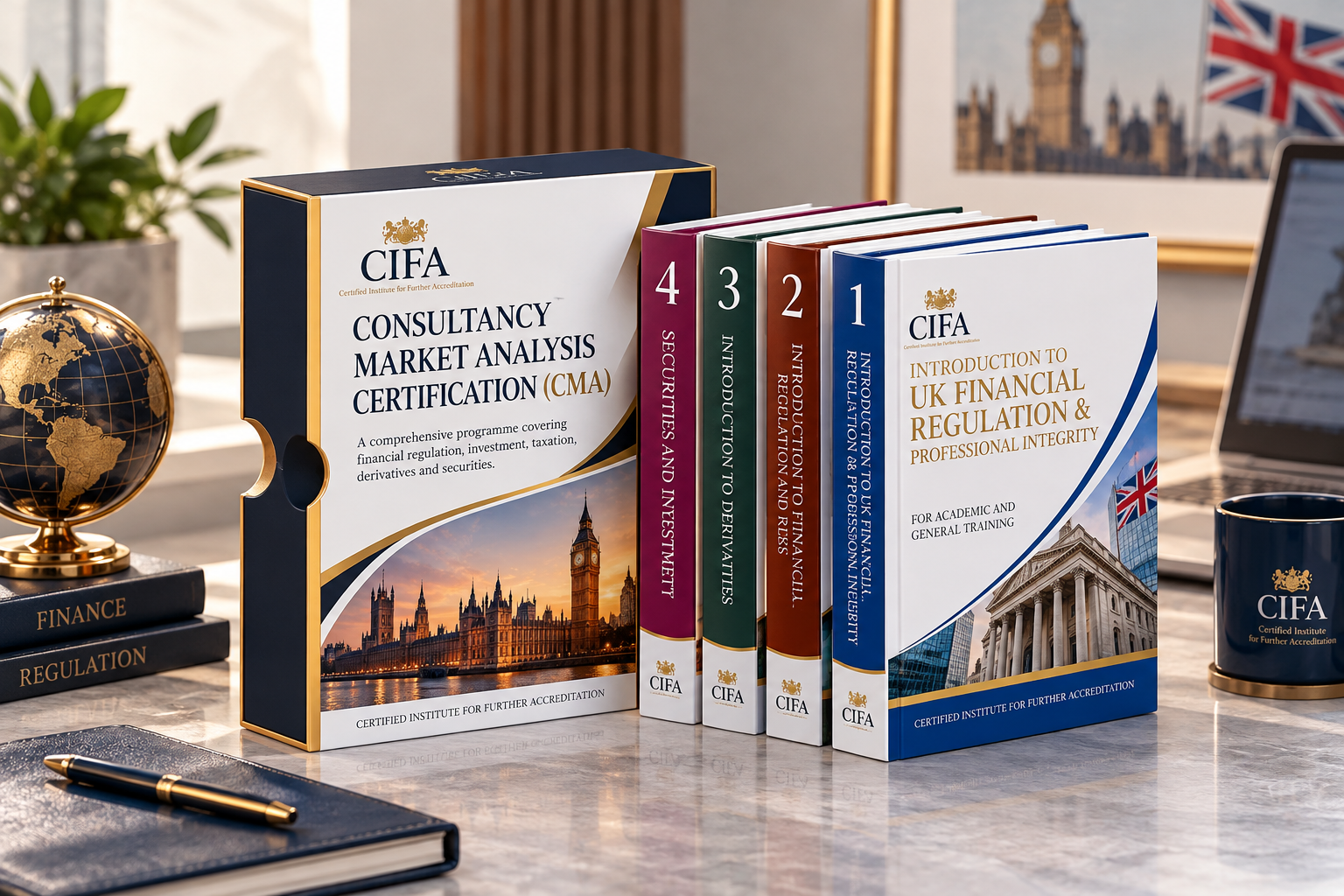
Choosing the right learning provider is an important step in building a successful finance career. CIFA offers flexible programmes designed to help learners develop practical knowledge and industry-relevant skills.
Whether you are pursuing an investment advisor certification, a financial advisor certification, or a financial regulation course UK, structured learning helps improve your understanding of today's financial services environment.
Courses cover important areas including:
Investment management certification
Wealth management certification
Financial compliance certification
Financial regulation
Investment risk management
Mortgage advisory principles
Anti-money laundering awareness
ESG investing
Financial markets
Derivatives
These programmes are designed to support continuous professional development while helping learners build knowledge that is relevant to today's UK financial sector.
For many aspiring finance professionals, the answer is yes.
If your objective is to improve your financial knowledge, strengthen your CV, develop practical industry skills, and demonstrate commitment to lifelong learning, then cifa certification worth it can be a valuable investment.
A recognised finance certification UK helps build credibility, supports professional development, and improves your competitiveness within the UK financial services industry.
Although certification alone does not guarantee career success, combining education with practical experience, strong communication skills, and continuous learning creates a solid foundation for long-term growth.
Whether you are beginning your career, changing industries, or looking to enhance your expertise, investing in high-quality financial education UK can help you achieve your professional goals.
Choosing the right qualification is an important step towards building a successful finance career. If your goal is to develop practical knowledge, improve your professional profile, and stay competitive in an evolving industry, then cifa certification worth it is a question worth serious consideration.
The UK financial services sector values professionals who continue learning and adapt to changing regulations, technologies, and market conditions. Whether you are searching for the best finance certification UK, pursuing an investment management certification, or exploring online finance courses UK, investing in professional education can support your long-term career success.


0 comments