
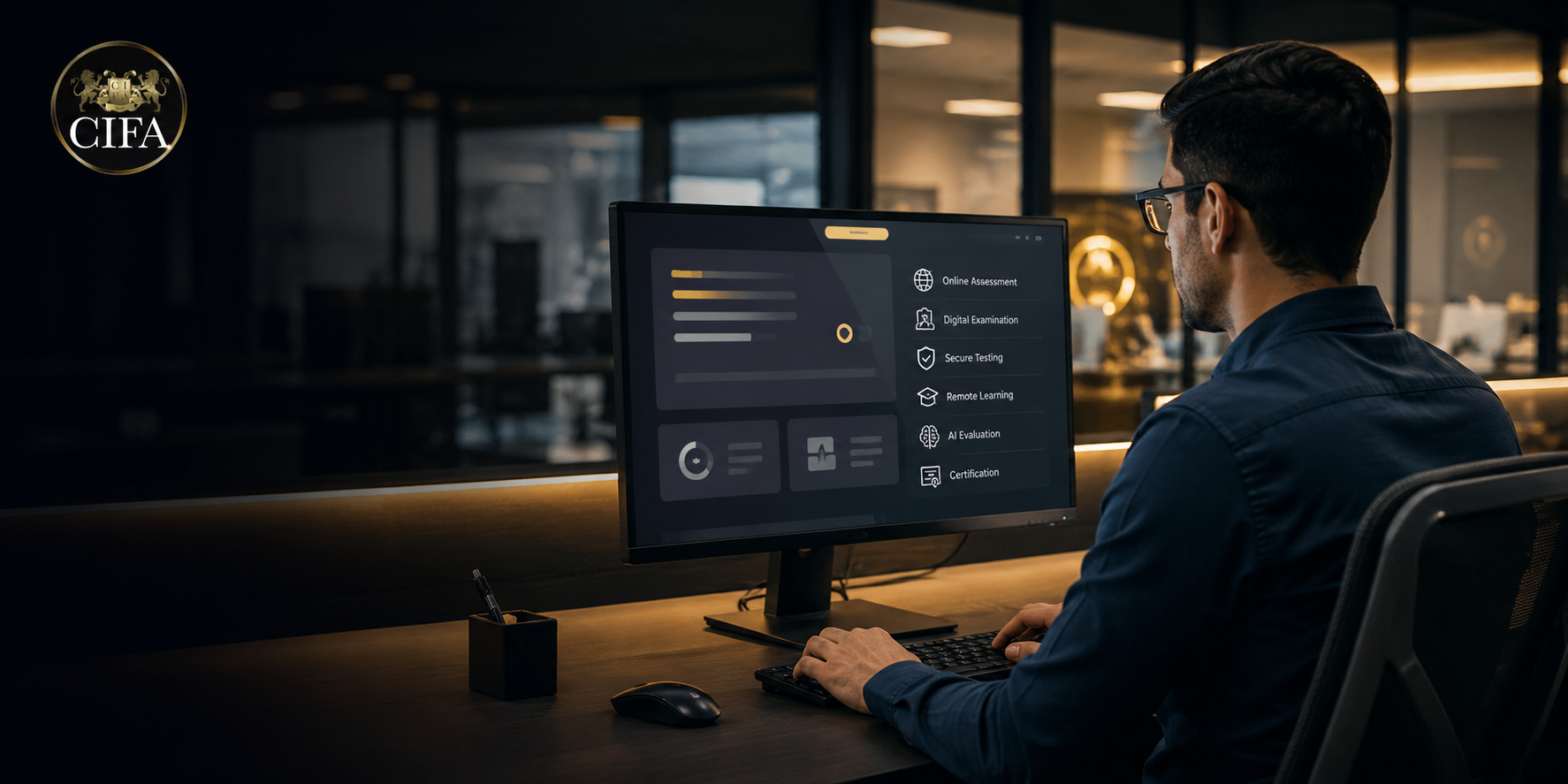
Digital technology has transformed the way educational institutions, professional training providers, and certification organizations conduct examinations. Traditional paper-based assessments are rapidly being replaced by secure, intelligent, and flexible online examination systems. As a result, Innovations in Online Examination and Assessment have become essential for delivering reliable, accessible, and efficient testing experiences.
Modern online examination platforms use artificial intelligence, cloud technology, biometric authentication, and automated monitoring to improve the quality of assessments. These technologies enable learners to complete examinations remotely while maintaining fairness, transparency, and security. They also help organizations reduce administrative costs, deliver faster results, and expand access to learners around the world.
As digital education continues to grow, understanding Innovations in Online Examination and Assessment has become increasingly important for students, educators, employers, and certification providers. CIFA supports modern learning by embracing innovative assessment technologies that improve examination quality while creating a more convenient learning experience.
Many learners ask Why are Innovations in Online Examination and Assessment important? Online assessment technologies provide flexibility, improve accessibility, strengthen examination security, and simplify assessment management.
Digital examinations enable candidates to complete assessments from almost any location while allowing institutions to maintain consistent examination standards. Automated technologies also improve efficiency by reducing manual administration and accelerating result processing.
These innovations help educational organizations provide scalable assessment solutions while preparing learners for an increasingly digital future.
Understanding Innovations in Online Examination and Assessment begins with recognizing how technology has transformed examination delivery and learner evaluation. Digital platforms now support secure online testing, artificial intelligence, biometric verification, automated grading, and real-time monitoring.
Educational institutions and professional certification providers increasingly rely on these technologies to improve assessment quality, strengthen security, and enhance the learner experience.
As technology continues to evolve, online examinations will become more intelligent, accessible, and efficient across education and professional training.
A common question is What are Innovations in Online Examination and Assessment? They refer to modern technologies that improve the design, delivery, monitoring, and evaluation of online examinations.
These innovations include artificial intelligence, cloud-based examination systems, biometric verification, remote invigilation, automated assessment tools, and advanced reporting systems.
Together, they create secure, reliable, and efficient examination environments while improving learner accessibility and institutional performance.
Another common question is How are Digital technologies improving online assessments? Modern technologies simplify examination management by automating registration, scheduling, identity verification, assessment delivery, grading, and reporting.
Candidates benefit from flexible access to examinations, quicker feedback, and improved learning experiences, while institutions benefit from reduced operational costs and stronger examination security.
These improvements continue to shape the future of digital education.
One of the most important developments in Innovations in Online Examination and Assessment is The advantages of remote proctoring and facial recognition technology. These technologies help educational institutions and certification providers conduct secure examinations without requiring learners to attend physical examination centres.
Remote proctoring enables examinations to be monitored through secure digital platforms, while facial recognition technology verifies candidate identity before and during examinations. Together, these technologies strengthen examination integrity while improving convenience for learners.
As online education expands globally, The advantages of remote proctoring and facial recognition technology continue to improve confidence in digital assessments.
Many people ask What is Remote proctoring? Remote proctoring is a technology-driven examination process that allows candidates to complete assessments online while being monitored through secure digital systems.
The technology may include webcam monitoring, microphone access, screen recording, browser controls, and artificial intelligence to supervise examination sessions.
Remote proctoring enables learners to take examinations from approved locations while maintaining consistent examination standards.
It reduces the need for physical examination centres while increasing accessibility.
Another frequently asked question is What is Facial recognition technology? Facial recognition technology uses biometric identification to verify a candidate's identity by comparing facial features with registered identification records.
This verification process helps ensure that the correct individual completes the examination, reducing the risk of impersonation and unauthorized access.
Biometric authentication improves examination security while making identity verification faster and more accurate.
It has become an important feature of modern online examination systems.
Many professionals ask What are the advantages of Remote proctoring and facial recognition technology? These technologies improve examination accessibility, strengthen identity verification, reduce administrative costs, and support secure remote assessments.
Educational institutions benefit from scalable examination delivery, improved operational efficiency, and enhanced credibility of certification programmes.
Learners enjoy greater flexibility by completing examinations from convenient locations without compromising assessment quality.
A final important question is How will Remote proctoring and facial recognition technology continue to evolve? Future developments are expected to include more advanced artificial intelligence, behavioural analysis, biometric authentication, cloud-based security, and automated examination monitoring.
These innovations will further improve examination integrity, learner convenience, and assessment accuracy while supporting the continued growth of online education.
Understanding The advantages of remote proctoring and facial recognition technology provides the foundation for the next stage of Innovations in Online Examination and Assessment, where Ensuring integrity and security in online exams becomes essential for maintaining trust, fairness, and reliability in digital assessments.
As online education and professional certification continue to expand, maintaining trust in digital assessments has become a top priority. One of the most important aspects of Innovations in Online Examination and Assessment is Ensuring integrity and security in online exams. Educational institutions and certification providers must protect examinations from fraud while creating a fair and reliable assessment environment for every learner.
Modern online examination systems use advanced technologies such as artificial intelligence, biometric verification, encrypted data transmission, browser lockdown software, and real-time monitoring to safeguard examinations. These security measures help ensure that assessments accurately measure a candidate's knowledge while protecting the value of academic qualifications and professional certifications.
Understanding Ensuring integrity and security in online exams enables organizations to deliver secure digital assessments that are trusted by learners, employers, and educational institutions.
A common question is Why is integrity important in online exams? Examination integrity ensures that assessment results genuinely reflect a learner's knowledge, skills, and abilities.
When examinations are conducted fairly and securely, educational institutions maintain credibility, employers trust professional qualifications, and learners receive recognition based on their own achievements.
Strong examination integrity also protects the reputation of certification providers and supports high educational standards.
Many learners ask What security measures protect online exams? Modern online assessment systems include multiple layers of security to prevent unauthorized access and reduce opportunities for academic misconduct.
Common security features include secure candidate authentication, encrypted examination data, browser lockdown technology, facial recognition, artificial intelligence monitoring, screen recording, activity logs, and randomized question banks.
Together, these measures create a secure digital examination environment while improving assessment reliability.
Another common question is How does technology prevent cheating in online exams? Advanced technologies monitor candidate behaviour throughout the examination process.
Artificial intelligence can identify unusual activities, while browser security prevents access to unauthorized websites or applications during examinations.
Biometric verification confirms candidate identity, and automated monitoring allows examination administrators to review suspicious events efficiently.
These technologies strengthen fairness without reducing learner accessibility.
Many professionals ask What are the benefits of secure online exams? Secure examinations improve confidence in digital learning by protecting examination integrity and ensuring consistent assessment standards.
Educational institutions benefit from stronger credibility, efficient examination management, and reduced operational costs.
Learners benefit from flexible testing, faster results, and qualifications that are widely respected because they are supported by robust security measures.
Employers also gain greater confidence in the validity of certified knowledge and professional skills.
A frequently asked question is What challenges do online examination providers face? Providers must balance strong security with a positive learner experience.
They must manage cybersecurity risks, protect personal data, verify candidate identities, maintain reliable digital infrastructure, and ensure examinations remain accessible for learners using different devices and internet connections.
Continuous system updates and regular security reviews help providers respond to evolving digital threats.
Another important question is What are best practices for Ensuring integrity and security in online exams? Organizations should combine secure authentication, remote proctoring, encrypted communication, regular software updates, clear examination policies, and ongoing staff training.
Monitoring examination performance and reviewing security procedures regularly also help improve assessment quality.
By implementing these best practices, institutions create trusted online examination environments that support fairness, transparency, and academic excellence.
Understanding Ensuring integrity and security in online exams prepares learners for the final stage of Innovations in Online Examination and Assessment, where Flexibility and convenience of anytime, anywhere exams demonstrate how technology is making education more accessible and learner focused.
One of the greatest benefits of Innovations in Online Examination and Assessment is the Flexibility and convenience of anytime, anywhere exams. Modern online examination technologies have removed many of the limitations associated with traditional testing by allowing learners to complete assessments from virtually any location. This flexibility has made education and professional certification more accessible for students, working professionals, and international learners.
With secure digital platforms, cloud-based technologies, and reliable internet access, candidates can schedule and complete examinations without travelling to physical test centres. Educational institutions also benefit by reaching a wider audience while reducing administrative costs and improving operational efficiency.
Understanding the Flexibility and convenience of anytime, anywhere exams helps learners and organizations appreciate how digital assessment is transforming education across the world.
A common question is What are Anytime, anywhere exams? These are online assessments that allow candidates to take examinations remotely using secure digital platforms at approved times and locations.
Instead of attending traditional examination centres, learners can complete assessments from their homes, workplaces, or other suitable environments while following established examination rules.
These examinations provide greater convenience without compromising assessment quality or security.
Technology ensures that the assessment process remains fair, reliable, and efficient.
Many learners ask Why are Anytime, anywhere exams important? Flexible online examinations remove geographical barriers and increase access to education for individuals living in different regions.
Working professionals can schedule examinations around their careers, while international learners can participate without travelling long distances.
Educational institutions also expand their reach by offering assessment opportunities to a broader global audience.
Greater flexibility encourages lifelong learning and continuous professional development.
Another common question is How do Anytime, anywhere exams improve the learner experience? Flexible assessment options reduce travel time, lower examination costs, and allow candidates to choose environments where they feel comfortable and focused.
Digital examination platforms also provide simplified registration, automated scheduling, faster results, and convenient access to examination information.
These improvements create a more efficient and learner-friendly assessment experience.
Modern technology supports both accessibility and educational quality.
Many professionals ask What are the benefits of Flexible online examinations? Flexible assessments increase accessibility, improve learner satisfaction, reduce administrative workload, and support global education initiatives.
Educational organizations benefit from scalable examination delivery, lower operational costs, and improved examination management.
Learners gain greater control over when and where they complete their assessments while maintaining high academic standards.
These advantages contribute to wider participation in education and professional certification.
A frequently asked question is What challenges are associated with Anytime, anywhere exams? Successful online examinations require reliable internet connections, compatible devices, secure examination software, and appropriate candidate support.
Organizations must also ensure examination integrity, data security, identity verification, and equal access for all learners.
Continuous investment in technology and technical support helps overcome these challenges while maintaining high-quality assessment standards.
Another important question is What is the future of Flexible online examinations? Future developments are expected to include more advanced artificial intelligence, cloud-based assessment platforms, biometric authentication, adaptive testing, and improved accessibility features.
These innovations will provide even greater flexibility while maintaining secure, fair, and reliable examinations.
By combining The advantages of remote proctoring and facial recognition technology, Ensuring integrity and security in online exams, and Flexibility and convenience of anytime, anywhere exams, learners gain a comprehensive understanding of Innovations in Online Examination and Assessment, preparing them for the future of digital education and professional certification.
The rapid advancement of digital technology has transformed the way examinations are delivered, monitored, and evaluated. Innovations in Online Examination and Assessment have made education and professional certification more accessible, secure, and efficient for learners and institutions around the world. Modern assessment technologies continue to improve learning experiences while maintaining high standards of fairness and reliability.
This guide explored The advantages of remote proctoring and facial recognition technology, highlighting how artificial intelligence and biometric verification strengthen candidate authentication, reduce examination fraud, and improve the credibility of online assessments. These technologies enable institutions to deliver secure examinations without requiring physical test centres.
We also examined Ensuring integrity and security in online exams, demonstrating the importance of strong authentication, encrypted systems, browser security, artificial intelligence monitoring, and clear examination policies. Secure online examinations protect academic standards while increasing confidence among learners, employers, and certification providers.
In addition, Flexibility and convenience of anytime, anywhere exams have expanded educational opportunities by allowing learners to complete assessments from suitable locations while maintaining examination quality. Flexible digital examinations support lifelong learning, improve accessibility, and make professional certification more convenient for individuals across the globe.
As online education continues to evolve, professionals who understand Innovations in Online Examination and Assessment will be well prepared for the future of digital learning. CIFA supports modern education by adopting innovative assessment technologies that improve security, accessibility, and learner experience. By combining advanced technology with trusted assessment practices, CIFA helps learners achieve their educational and professional goals with confidence.
CIFA helps learners understand Innovations in Online Examination and Assessment, including remote proctoring, facial recognition technology, secure online examinations, and flexible digital assessment methods.
Through CIFA, learners gain practical knowledge of The advantages of remote proctoring and facial recognition technology and Ensuring integrity and security in online exams, helping them understand modern, secure, and reliable assessment systems.
CIFA explains how Flexibility and convenience of anytime, anywhere exams increase accessibility, support lifelong learning, reduce travel requirements, and provide a convenient examination experience while maintaining high academic standards.



0 comments