

To excel as a mortgage advisor, professionals must demonstrate regulatory knowledge, ethical decision-making, risk awareness, and practical mortgage structuring skills. The Mortgage Advisor Certification, offered by CIFA, is designed to provide learners with a comprehensive foundation in UK mortgage regulations, lending practices, ethical standards, risk assessment, and financial planning.
This certification supports learners seeking to enter or progress within mortgage advisory, financial services, compliance, and risk management roles by providing structured, practical, and industry-aligned knowledge.
The Mortgage Advisor Certification is a professionally designed course bundle aimed at individuals who require a clear, structured, and practical understanding of the UK mortgage market, lending regulations, client advisory principles, and risk management.
This certification focuses on equipping learners with:
Knowledge of the UK mortgage and financial regulatory framework
Understanding of FCA rules relevant to mortgage advice
Awareness of professional ethics and integrity in advisory roles
Core principles of mortgage products and lending strategies
Understanding of financial risk associated with mortgage lending
Insight into affordability assessments, taxation, and client financial planning
As a foundational qualification, this course is particularly valuable for professionals working in mortgage brokerage, advisory services, financial planning, compliance, and lending operations. It also provides an excellent starting point for individuals seeking long-term careers in mortgage advisory and regulated financial environments.
CIFA is a leading professional education provider specialising in finance, regulation, compliance, and business-focused certifications. Its programmes reflect real-world regulatory expectations, ethical responsibilities, and operational realities of the mortgage and financial services sector.
Key reasons learners choose CIFA include:
Regulation-aligned learning: Courses reflect current UK mortgage and financial regulations
Strong ethical foundation: Emphasis on professional integrity and conduct
Practical advisory skills: Real-world application of mortgage and lending principles
Risk-aware approach: Structured understanding of financial and lending risks
Flexible online delivery: Suitable for working professionals and students
Accredited certifications: Industry-recognised and professionally aligned
By enrolling with CIFA, learners gain access to a structured, credible learning experience that supports professional growth and regulatory competence.
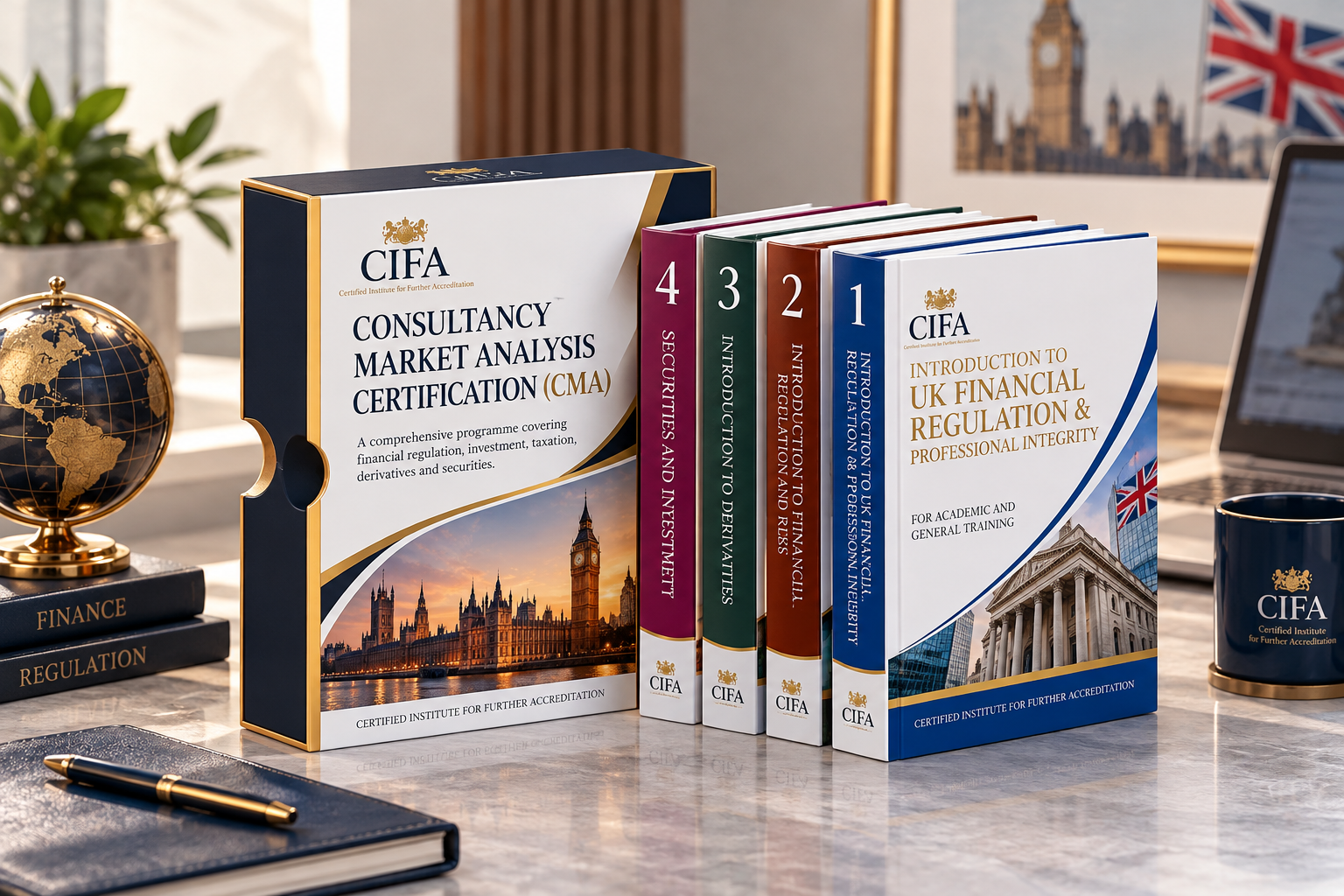
The Mortgage Advisor Certification is delivered digitally via CIFA’s online learning platform and consists of two integrated courses, covering essential regulatory, advisory, and risk concepts required for professional competence.
This course provides learners with a thorough understanding of the regulatory framework governing mortgage advice and the ethical standards expected of mortgage professionals.
Key Topics:
Overview of UK mortgage regulations
FCA rules and guidance for mortgage advisors
Regulatory responsibilities and compliance obligations
Professional integrity and ethical decision-making
Conduct risk and client protection
Regulatory enforcement and redress mechanisms
Why It Matters:
Understanding mortgage regulations and ethics is essential for building client trust, ensuring market integrity, and maintaining compliance. This course ensures learners appreciate how regulation supports transparency, accountability, and professional standards in mortgage advisory.
This course introduces learners to mortgage products, lending principles, financial risk assessment, and the role of taxation and affordability in client planning.
Mortgage Products
Learners explore the features and functionality of mortgage products, helping clients make informed decisions.
Key Topics:
Types of mortgage products (fixed-rate, variable, tracker, offset)
Lending criteria and eligibility
Interest rate impacts and payment structures
Mortgage term planning
Client suitability and product recommendation
Risk
This module provides insight into the types of financial and lending risks that advisors must manage.
Key Topics:
Interest rate and market risk
Credit and affordability risk
Client default risk
Risk assessment techniques
Mitigation strategies
Key Topics:
Income, expenditure, and affordability assessment
Capital gains and property taxation considerations
Tax-efficient mortgage and investment strategies
Impact of personal circumstances on mortgage planning
Why This Knowledge Matters:
Comprehensive mortgage knowledge enables advisors to structure suitable lending solutions, manage client risk, and optimise long-term financial outcomes.
Upon completing this certification, learners will be able to:
Understand UK mortgage regulations and the role of the FCA
Apply professional integrity and ethical standards in advisory roles
Explain different mortgage products and lending strategies
Conduct affordability and risk assessments
Understand the impact of taxation on mortgage planning
Provide client-focused, compliant, and suitable mortgage advice
These outcomes provide a solid foundation for a career as a competent and trusted mortgage advisor.
The Mortgage Advisor Certification is suitable for:
Aspiring mortgage advisors
Entry-level mortgage and financial services staff
Compliance and regulatory support professionals
Financial planners and advisory assistants
Risk and operations professionals in lending
Career changers entering mortgage or financial services
This programme is ideal for individuals seeking to operate confidently within a regulated mortgage advisory environment.
Upon successful completion of the assessments:
Learners receive a digital certificate after proctored exams
Printed certificates are available upon request
All CIFA certifications are fully accredited
Certification has no expiry date, providing long-term professional value
Demonstrates competence in mortgage regulation, advisory skills, risk management, and ethics
Regulatory awareness: Strong understanding of FCA mortgage regulations
Ethical foundation: Commitment to professional integrity
Advisory competence: Ability to recommend suitable mortgage products
Risk management skills: Assess and mitigate lending and client risks
Financial planning insight: Improved affordability assessment and tax considerations
Career development: Entry or progression within mortgage and financial services roles
The Mortgage Advisor Certification by CIFA is a comprehensive, industry-aligned programme designed to equip learners with the regulatory, advisory, risk, and financial planning knowledge essential for success in the mortgage sector.
By combining regulatory awareness, ethical standards, mortgage expertise, and risk management strategies, this certification provides a strong foundation for individuals seeking a professional and credible career in mortgage advisory and financial services.
For those looking for a structured, practical, and professionally recognised pathway into regulated mortgage advisory roles, this certification represents an excellent choice.
FAQ
1. What qualifications do you need to be a mortgage advisor?
In the UK, a Level 3 CeMAP (Certificate in Mortgage Advice and Practice) is the most common qualification.
Some roles may accept other regulated qualifications in financial services, but CeMAP is widely preferred.
Strong numeracy, communication skills, and understanding of UK financial regulations are also essential.
2. Are mortgage advisors well paid?
Salaries vary by experience and location.
Entry-level advisors: £20,000–£30,000 per year.
Experienced advisors: £35,000–£50,000+, with high-performing brokers earning £60,000+ or more via commissions.
Earnings often increase with sales success and client base growth.
3. Can you be a mortgage advisor without CeMAP?
Technically yes, but most UK firms require CeMAP or equivalent for FCA-regulated advice.
Without it, you can work in support or administrative roles in mortgage firms but cannot provide regulated advice.
4. How hard are mortgage advisor exams?
CeMAP exams are moderately challenging.
The qualification is split into three units covering mortgage law, regulations, and practice.
With structured study (typically 3–6 months), most candidates pass on the first or second attempt.
5. How difficult is being a mortgage advisor?
The role requires:
Understanding complex mortgage products
Regulatory compliance knowledge
Client financial assessment skills
Handling stressful client situations
The difficulty depends on experience, client load, and market conditions.
6. How much do mortgage brokers earn?
Average UK mortgage broker salary: £30,000–£50,000/year, rising with experience and commissions.
Successful brokers with high client volumes can earn £60,000–£100,000+.
7. How to become a mortgage advisor with no experience?
Obtain a CeMAP Level 3 qualification.
Start in support or administrative roles in mortgage or financial firms to gain practical exposure.
Build knowledge in regulations, products, and client advisory.
Network within the industry for junior advisory roles.
8. What is a Level 3 certificate in mortgage advice?
Also called CeMAP Level 3, it is the standard regulated qualification for mortgage advice in the UK.
Covers:
Mortgage law and practice
UK financial regulations
Client advice and suitability
Enables you to provide regulated mortgage advice.
9. How long does it take to complete a CeMAP qualification?
Typically 3–6 months for full-time study.
Part-time or online study can take 6–12 months, depending on pace and exam readiness.
10. Is a mortgage advisor a stressful job?
Yes, stress can arise from:
Meeting sales targets
Handling client finances and expectations
Keeping up with regulatory changes
Good organisation, time management, and communication skills reduce stress.

0 comments