
For people considering a career in mortgage advice, CeMAP is one of the first qualifications they are likely to encounter. The Certificate in Mortgage Advice and Practice is closely associated with UK mortgage-adviser education because it develops knowledge of financial-services regulation, mortgage products, mortgage processes and the practical application of mortgage advice.
Prospective learners, however, usually need more than a definition of the qualification. They want to understand the CeMAP requirements, how the qualification is structured, what the CeMAP cost may involve, whether they can study through a CeMAP online course, how long completion could take and what career opportunities may follow. Searches for CeMAP salary UK and mortgage advisor qualification UK also show that learners are often evaluating a wider career decision rather than simply choosing a course.
There is another important distinction to understand from the beginning: completing an educational qualification is not the same as receiving regulatory authorisation to operate independently as a mortgage broker or provide regulated mortgage advice. The FCA states that firms carrying on regulated mortgage-broking activities need the appropriate authorisation, while individuals carrying out regulated activities must operate within the relevant regulatory and competence framework.
This guide explains the CeMAP pathway in practical terms and also considers where CIFA's mortgage-related education may fit for learners comparing professional-development options.
CeMAP stands for the Certificate in Mortgage Advice and Practice. It is a professional qualification designed for people developing the knowledge required for mortgage-advice work in the UK.
The current qualification is delivered through LIBF as part of Walbrook Institute London. Its official structure comprises three modules covering financial-services regulation and ethics, mortgages, and the practical assessment of mortgage-advice knowledge. The qualification is listed within the FCA's appropriate-qualification framework for relevant mortgage activities.
People who investigate CeMAP commonly include career changers, financial-services employees, graduates, mortgage administrators and individuals who want to progress towards mortgage-adviser positions. Its subject matter is particularly relevant because mortgage advisers need more than product knowledge: they must understand the regulatory environment, customer circumstances, mortgage processes and how knowledge is applied when considering client needs.
CeMAP should nevertheless be viewed as part of a professional journey rather than a licence to operate independently. Passing a mortgage qualification does not itself establish a regulated business, create FCA permissions or remove an employer's responsibility to assess competence.
For example, the FCA states that mortgage brokers undertaking regulated activities must either be authorised or operate as an appointed representative of a firm holding the necessary permissions.
That distinction between qualification and regulatory permission or professional competence is fundamental when considering any mortgage adviser qualification.
Understanding CeMAP requirements means separating formal eligibility conditions from the abilities that simply make professional study easier.
CeMAP is frequently considered by people from different career backgrounds. The official qualification information specifically notes that people can consider mortgage advice regardless of their previous career background.
A university degree should therefore not be assumed to be a universal prerequisite simply because CeMAP concerns professional financial services. Similarly, learners should not assume that several years of previous banking or mortgage experience are automatically required before they can begin studying.
That does not mean the course requires no preparation.
Basic numeracy can be valuable because mortgage education involves interest, repayments, affordability, financial products and related calculations. Learners also encounter terminology drawn from regulation, property finance, lending and financial services. Someone who has never worked in finance may therefore need more time to become comfortable with the vocabulary.
English comprehension is equally important. Professional finance examinations often require candidates to distinguish between answers that appear similar, interpret scenarios accurately and understand regulatory terminology precisely. A learner does not simply need to recognise words; they must understand what a question is asking.
Independent study discipline is another practical requirement. Even where online resources, revision support or tutoring are available, learners still need to read course materials, revisit difficult subjects and prepare appropriately for assessments.
Prospective students should therefore think about CeMAP requirements in two categories: first, the formal eligibility rules published by the qualification provider; and second, the personal preparation required to study effectively.
Before enrolling, candidates should always review the current qualification specification and provider terms rather than relying on older online articles, because examination structures, syllabus wording and administrative arrangements can change.
CeMAP can be considered by beginners, including people who have not previously worked as mortgage advisers.
That does not mean every beginner will find the course equally straightforward. Someone with experience in banking, lending, compliance or financial services may recognise some concepts immediately. A learner changing careers from an unrelated field may need additional time to understand the terminology and context.
A good beginner approach is to develop knowledge progressively. Instead of attempting to memorise large amounts of information immediately, learners can first understand how the UK financial-services environment works, what regulators do, how lenders and borrowers interact and how the mortgage process develops from initial enquiry through application and completion.
Consistency matters. Studying several manageable sessions each week will often be easier to sustain than leaving substantial portions of the syllabus until immediately before an examination.
Beginners should also make active use of glossaries, practice questions, revision materials and explanations of unfamiliar terminology. The objective is not simply to remember definitions but to understand how concepts relate to practical mortgage situations.
Most importantly, learners should not interpret "suitable for beginners" as meaning "effortless". Professional mortgage education involves regulation and detailed subject knowledge, so structured preparation remains important regardless of previous experience.
The CeMAP exam units are an area where online information can become confusing, particularly because older articles and training providers sometimes describe the structure differently.
The current official CeMAP structure contains three modules and five units.
CeMAP 1 is currently titled Financial Services, Regulation and Ethics (FSRE).
It establishes the wider financial-services foundation required before mortgage concepts can be understood within their regulatory setting. Current CeMAP 1 content is divided into two units: Industry, Regulation and Key Parties, and Skills, Principles and Ethical Behaviours.
For a beginner, this stage helps explain the environment in which mortgage advice takes place. Regulation, professional behaviour and the responsibilities of firms and individuals are not separate from mortgage advice; they influence how advice is provided and how customers should be treated.
CeMAP 2 focuses specifically on Mortgages (MORT).
The current structure contains two units: Mortgage Law, Practice and Application, and Mortgage Products and Post Completion. The qualification therefore moves from the broader regulatory foundation towards the mechanics and practical considerations of mortgage lending.
Learners develop their understanding of mortgage products and processes while also considering the issues that can arise during and after a mortgage transaction.
CeMAP 3 is the Assessment of Mortgage Advice Knowledge.
Rather than simply introducing another collection of disconnected subjects, this stage is concerned with consolidating knowledge and applying it to mortgage-advice situations. Current official information describes the assessment as scenario-based, helping test whether learners can interpret information and apply what they have studied.
This application element matters because professional advice requires judgement within an established regulatory and technical framework, rather than the ability to memorise terminology alone.
Some searches for CeMAP exam units (R01, R02, R03) incorrectly create the impression that CeMAP 1, 2 and 3 are called R01, R02 and R03.
They are not.
R01, R02 and R03 are unit codes used within Chartered Insurance Institute qualifications. R01 covers Financial Services, Regulation and Ethics, R02 concerns Investment Principles and Risk, while R03 relates to Personal Taxation. They form part of CII financial-planning qualification structures rather than being alternative names for CeMAP 1, 2 and 3.
There can be subject overlap because different financial-services qualifications understandably address regulation, ethics, taxation or related principles. Similar subject matter, however, does not make the qualification structures interchangeable.
Learners should therefore check the official specification for the particular qualification they intend to study rather than relying on generic references to "R01-R03 CeMAP".
The overall CeMAP cost can involve more than a headline training-course price.
At the time of writing, the official CeMAP awarding-body page lists a full-qualification registration fee and states that study materials and the initial examination entry are included. It also identifies separate costs for module-by-module registration, examination resits and optional revision resources. Because qualification fees can change, prospective learners should verify the current amount directly before paying.
Additional training providers can introduce another layer of cost. Some learners may be comfortable using the core materials supplied with qualification registration, while others may choose additional tuition, live classes, revision packages, tutor support or practice resources.
Consequently, when comparing CeMAP fees, investigate exactly what each quoted amount covers. A lower headline price may exclude examination registration or supplementary tuition, while a higher package may include resources that another provider charges for separately.
Potential cost components may include course tuition, awarding-body registration, examination entry, additional practice materials, revision tools, tutoring and resits where required.
Learners comparing CeMAP with broader mortgage education can also review CIFA's Mortgage Advisor Certification to understand its curriculum, format and current terms before deciding which educational route corresponds to their career objective.
CIFA's programme and CeMAP should not simply be treated as interchangeable names. If a particular job requires an FCA-appropriate qualification for a specified regulated activity, candidates should establish precisely which qualification their employer or regulatory pathway requires.
There is no single answer to how long does CeMAP take from the learner's perspective.
The current official CeMAP registration gives candidates registering for the complete qualification an 18-month period in which to complete it. Candidates registering module by module are currently given a separate completion period for each module.
That is an administrative completion window, not a prediction that every student will require the same amount of study time.
Actual CeMAP duration depends on previous knowledge, weekly study availability, examination preparation, work commitments and how quickly a learner becomes comfortable with the subject matter.
Someone already employed in mortgage operations may recognise terminology and processes that are completely new to a career changer. Conversely, a finance professional who understands regulation may still need substantial study in mortgage-specific topics.
A realistic personal timetable should begin with the learner's available hours rather than an advertised "fast-track" completion claim. Estimate how many focused study sessions can genuinely be maintained each week, divide the syllabus into manageable sections and leave dedicated time for revision and assessment preparation.
It is also useful to distinguish between finishing course content and completing the qualification. Reading or watching the learning material does not necessarily mean a learner is ready for every relevant assessment.
Yes. The current official CeMAP learning structure includes online study resources, and its electronic assessments can be taken through the provider's virtual learning environment with remote invigilation.
That makes a CeMAP online course particularly relevant to people balancing education with employment, family commitments or another professional qualification.
Online mortgage training can provide flexible access to materials and allow learners to revisit difficult subjects without attending a physical classroom at a fixed time. Digital practice questions, revision tools and structured learning portals can also make progress easier to organise.
Flexibility, however, should not be confused with lack of structure.
A self-paced learner still needs a timetable. Without scheduled classroom sessions, it is easy for study to become irregular, so online students should set weekly objectives and allocate revision periods before assessments.
It is also important to understand what a third-party online course actually provides. The official CeMAP awarding-body guidance notes that supplementary learning support is optional and that learners still need to register and complete CeMAP through the qualification awarding body.
When evaluating wider digital finance education alongside CeMAP, learners can explore CIFA finance courses and compare subject coverage, learning structure and intended outcomes with their own professional objectives.
Before purchasing any CeMAP training package, check the qualification registration arrangements, learning materials, tutor access, revision support, examination process, access period and total cost.
Searches for CeMAP salary UK are understandable because many learners want to know whether the time and cost involved in professional education can support a worthwhile career move.
The important point is that CeMAP does not produce a fixed salary.
Mortgage-adviser earnings vary according to employer, geographic location, experience, responsibilities, client base and remuneration structure. Some positions are predominantly salaried, while others may include commission, bonuses or other performance-related components.
A trainee mortgage adviser, for example, may be employed under supervision while developing practical competence. An established adviser handling more complex customer relationships may have a different compensation structure. Senior positions, management responsibilities or specialist mortgage experience can change earnings again.
The term "CeMAP salary" can therefore be misleading. Employers generally pay for a job and its responsibilities, not simply for possession of a certificate.
Qualifications can support professional progression because certain roles require relevant technical knowledge and appropriate qualifications, but experience, performance, competence and employer requirements remain significant.
Anyone comparing mortgage careers should therefore research current vacancies for the location and job level they are targeting rather than relying on a single salary figure published online.
Mortgage-related education can support applications for several types of financial-services work.
Typical directions include trainee mortgage adviser positions, mortgage adviser roles, mortgage consultant positions, mortgage-broker environments and related mortgage or lending functions.
Job titles alone do not determine eligibility. One employer may use "mortgage consultant" for a regulated advice position while another uses a similar title for a different function. Candidates should therefore read the responsibilities and qualification requirements attached to each vacancy.
Experience can also matter considerably. Passing examinations demonstrates educational achievement, but employers may still require supervised practice, evidence of competence, product knowledge, communication ability and understanding of internal processes.
Ongoing professional development also remains important. Regulation, mortgage products, lending policies and market conditions change, so professional knowledge cannot remain static after certification.
CeMAP can therefore be an important part of a mortgage career, but it should not be presented as a guarantee of employment.
People searching for a mortgage advisor qualification UK frequently encounter CeMAP because the qualification appears within the FCA's appropriate-qualification framework for relevant mortgage activities.
That makes it highly relevant to prospective mortgage advisers, but the career decision should still begin with the intended role.
Ask what activities the job actually involves. Will you provide regulated mortgage advice to retail customers? Will you work as an employee of an authorised firm? Are you considering becoming an appointed representative? Or is your objective broader mortgage knowledge rather than performing regulated advice?
The FCA's training and competence framework emphasises that the activity performed, rather than merely the job title, determines which qualification requirements are relevant.
This explains why the distinction between qualification and professional or regulatory eligibility matters.
Completing CeMAP may satisfy an important educational requirement for relevant mortgage work, but it does not independently authorise a person to establish a regulated brokerage or conduct regulated activities outside the required regulatory framework.
Anyone planning a mortgage-adviser career should therefore review current FCA requirements and discuss qualification expectations with prospective employers.
CeMAP should be compared with other financial qualifications according to career purpose rather than brand recognition alone.
If the learner's primary goal is mortgage advice, a mortgage-specific pathway deserves particular attention. Someone seeking broader financial-planning knowledge, investment-advice competence or specialist wealth-management expertise may require a different qualification structure.
For example, the CII Certificate in Mortgage Advice currently combines a financial-services and regulation unit with a mortgage-advice unit, while the CII also offers wider financial-planning qualifications containing units such as R01, R02 and R03.
Qualifications such as those offered by CII, CISI and other professional or educational organisations should not therefore be ranked as universally "better" or "worse" without considering the intended role.
Similarly, CFA programmes pursue substantially different professional objectives from a UK mortgage-adviser qualification.
A useful comparison examines subject coverage, assessment structure, regulatory relevance, cost, learning format, employer expectations and possible progression routes.
The best educational choice is the one aligned with the learner's intended professional activity.
Provider selection deserves careful attention because CeMAP qualification registration and supplementary CeMAP training are not necessarily the same thing.
The official awarding-body guidance confirms that additional learning-support providers are optional. It also advises learners to examine course accuracy, fees, terms, provider details and whether a provider is legitimately entitled to make particular recognition claims.
When comparing providers, consider the syllabus coverage, quality of learning materials, tutor availability, examination preparation, online accessibility, revision support, course-access period and total cost.
Transparency is particularly important. Learners should be able to determine whether the advertised fee includes the qualification examination or merely training material.
CIFA is another education provider learners can investigate when comparing mortgage and financial-services programmes. Reviewing CIFA alongside the formal requirements of your intended career can help you distinguish general professional development from qualifications specifically required for regulated activities.
The cheapest option is not automatically the most suitable. Equally, a more expensive package is not automatically better. The important question is whether the learning experience provides useful, accurate and relevant support for the learner's objective.
CIFA offers mortgage-related and wider finance education that prospective learners can compare with other professional-development routes.
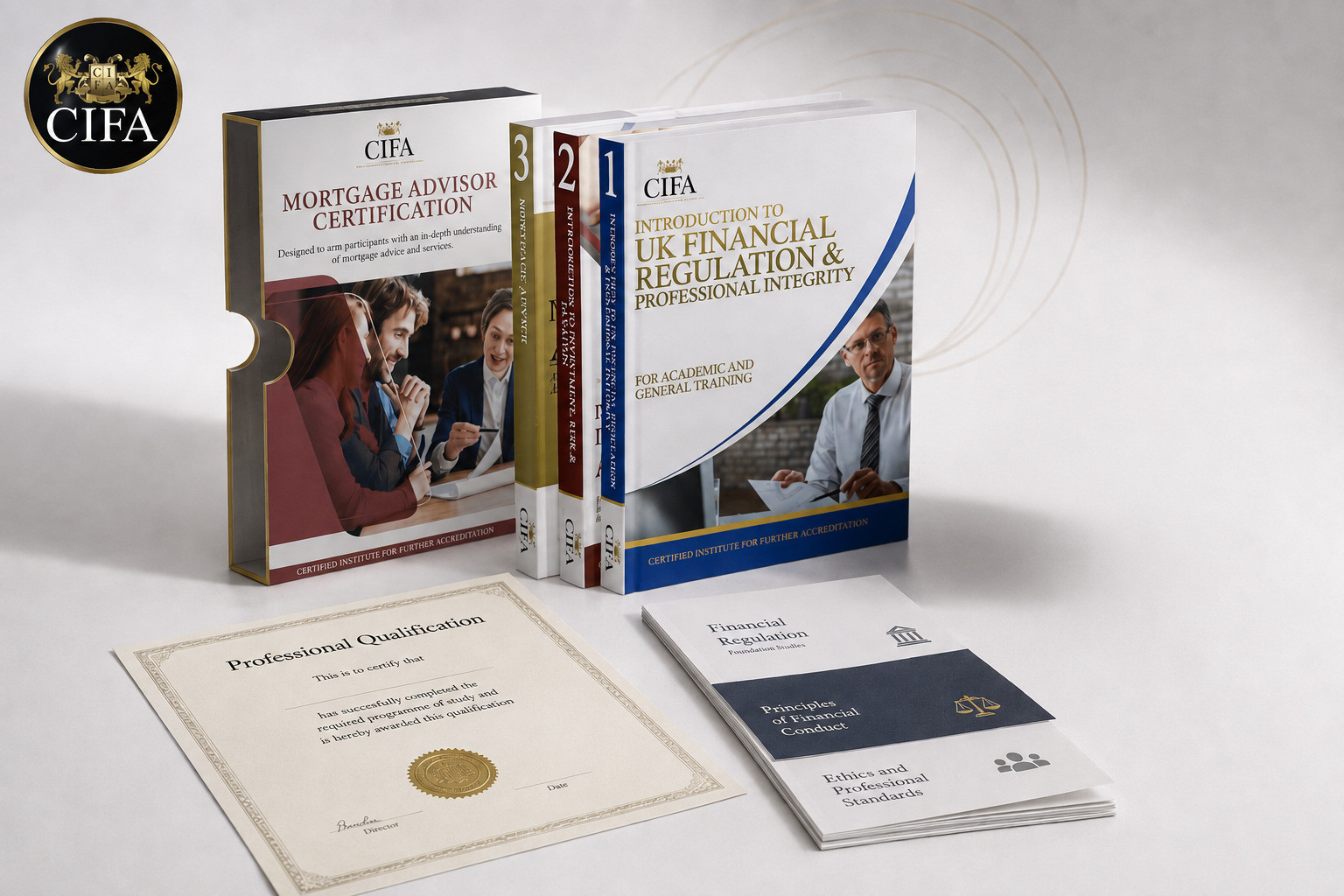
Its Mortgage Advisor Certification covers areas including UK financial regulation, mortgage advice and financial topics connected with professional finance education. CIFA's website currently presents the programme as a digital bundle containing three courses.
For learners, the useful question is not whether one provider is universally "best", but whether the curriculum corresponds to what they want to achieve.
Someone seeking broader education in mortgage concepts and financial services may value a structured digital programme. Someone seeking CeMAP specifically must additionally ensure that they are registered for and completing the actual CeMAP qualification through its awarding body.
Before enrolling, prospective students can read more about CIFA and review the organisation's background, educational approach and current programme information.
This type of due diligence should form part of any course decision. Learners should compare curricula, assessment arrangements, certification terminology and the requirements attached to their intended occupation.
Learning support can make a meaningful difference when studying technical subjects.
Mortgage education introduces concepts drawn from regulation, lending, property transactions, taxation and professional ethics. Difficult terminology can become easier to understand when learners have access to explanations, structured resources and opportunities to resolve questions.
Support is particularly valuable when a learner understands a definition but struggles to apply it to a practical scenario. Good instruction should help students identify why an answer is appropriate rather than encouraging memorisation without context.
Instructor information can also help prospective learners assess who is associated with a course and what kind of learning structure they can expect.
Students researching CIFA can review the available CIFA instructors as part of their wider assessment of the provider.
Whatever provider is chosen, learners should establish what support is actually included before enrolment. Recorded material, instructor access, practice questions and personalised assistance are different forms of support and should not be assumed to be equivalent.
Effective CeMAP preparation begins well before the examination itself.
Create a realistic timetable based on the syllabus and the number of hours you can maintain each week. Regular study is usually more sustainable than attempting to absorb a large amount of information immediately before an assessment.
Conceptual understanding should come before memorisation. Regulatory principles, mortgage processes and professional obligations often make more sense when learners understand why the rules or processes exist.
Practice questions can then help identify knowledge gaps. When an answer is wrong, investigate the reason rather than simply memorising the correct option.
Learners should also revisit terminology regularly. Financial-services vocabulary becomes easier when encountered repeatedly in different contexts.
Each unit deserves attention, including subjects that initially appear straightforward. Areas of weakness should receive additional revision rather than being avoided.
Finally, leave dedicated time between first completing the material and taking the examination. Finishing a course section is not necessarily evidence that the information can already be recalled and applied under assessment conditions.
No study strategy can guarantee a pass, but organised preparation can create a more structured and informed approach.
CeMAP can be highly relevant when the learner's intended occupation involves UK mortgage advice.
It may be considered by people entering financial services for the first time, career changers moving into mortgage work, existing employees progressing towards adviser responsibilities and professionals seeking more formal mortgage-specific knowledge.
Whether it is "worth it", however, depends on what the individual intends to do afterwards.
Someone targeting a mortgage-adviser vacancy that identifies CeMAP as an appropriate or expected qualification may find the route directly relevant. Someone aiming for investment analysis, corporate finance or institutional asset management would probably need a different educational pathway.
Prospective learners should therefore assess employer requirements, the activities they intend to perform, current regulatory expectations, their previous experience and their longer-term professional-development plans.
The value of a qualification comes from its relevance to the intended professional destination, not merely from adding another certificate to a CV.
CeMAP remains an important qualification to investigate for people considering mortgage-advice careers in the UK, but learners should approach the decision with an accurate understanding of what the qualification does and does not provide.
The CeMAP requirements should be distinguished from useful study skills. CeMAP fees and CeMAP cost need to be assessed by examining qualification registration, examinations, optional tuition and potential additional resources. The CeMAP exam units should be understood according to the current three-module structure rather than incorrectly describing R01, R02 and R03 as CeMAP modules.
Likewise, CeMAP duration depends both on official registration periods and individual learning pace. A CeMAP online course can provide useful flexibility, while CeMAP salary UK should be viewed as a career-market question influenced by employer, experience, location and remuneration structure rather than a guaranteed return attached to the qualification.
Most importantly, people researching a mortgage advisor qualification UK should distinguish educational achievement from regulatory authorisation and workplace competence.
Before enrolling, compare the qualification structure, current eligibility information, total cost, learning support, examination arrangements and requirements of the roles you intend to pursue. CIFA's mortgage and finance education can form part of that comparison, provided learners carefully match any programme they choose to their actual professional objectives.



0 comments